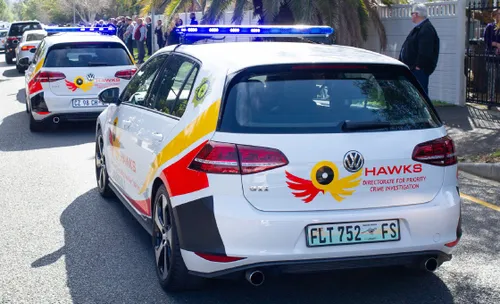
The Directorate for Priority Crime Investigation (Hawks) has secured a significant preservation order valued at R5.86 million over four properties linked to a notorious rhino horn trafficking and poaching syndicate. This breakthrough comes after a coordinated investigation involving local and international law enforcement agencies, including the National Prosecuting Authority and the United States Fish and Wildlife Service.
Rhino Horn Trafficking Exposed
The order is a direct result of the extensive investigation, which has already led to the arrest of 16 suspects, including Congolese national Francis Kipampa. Kipampa is currently serving an 18-year prison sentence after pleading guilty to rhino horn trafficking, money laundering, and his central role in a sophisticated wildlife crime network. The remaining 15 accused are awaiting trial on multiple charges, according to Hawks spokesperson Lieutenant Colonel Magonseni Nkosi.
A wide-ranging probe brought together multiple stakeholders, including the Hawks Directorate for Priority Crimes Investigation, KPMG, SAPS Crime Intelligence, SANParks, Financial Intelligence Centre, and the Department of Home Affairs, among others. Investigators made a significant breakthrough when six rhino horns were recovered in Kabokweni, leading to the launch of Project Blood Orange.
Project Blood Orange
During the investigation, a vehicle fitted with a false compartment was discovered at Kipampa’s residence. The Hawks say the operation exposed deep corruption within wildlife protection structures. “Project Blood Orange showcases the power of financial forensic investigations in exposing the activities of corrupt rangers who shared crucial information with rhino poaching syndicates,” said the Provincial Head of the Directorate for Priority Crime Investigation, Major General Nico Gerber.
The following are some key facts about Project Blood Orange:
- Six rhino horns were recovered in Kabokweni, leading to the launch of the project.
- A vehicle fitted with a false compartment was discovered at Kipampa’s residence.
- The project exposed deep corruption within wildlife protection structures.
- 16 suspects, including Kipampa, were arrested and charged with various crimes.
Authorities say the preservation order marks a significant step in dismantling the financial infrastructure behind wildlife trafficking networks, with further asset forfeiture proceedings expected to follow. For more information on wildlife trafficking and conservation efforts, visit the Wikipedia page on wildlife trafficking.