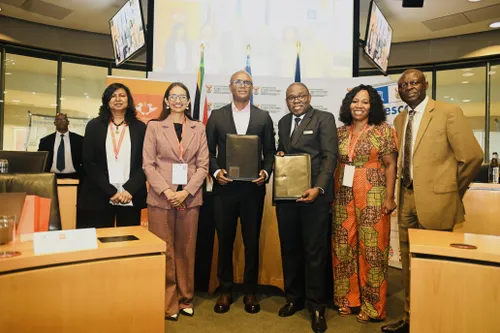
The University of Johannesburg (UJ) has taken a significant step in shaping Africa’s digital future by securing a UNESCO Chair in Cultural Inclusivity and Equity in Digital Media in Africa for the 2026 to 2030 cycle. This prestigious award places UJ among over 1,000 UNESCO Chairs in 120 countries, following a competitive global process involving 135 applications reviewed at UNESCO headquarters in Paris.
The UNESCO Chair, held by Professor Prinola Govenden in UJ’s Faculty of Humanities, will focus on digital inclusion, cultural representation, and fair access to knowledge in Africa’s rapidly evolving digital landscape. It will also examine the impact of the Fourth Industrial Revolution (4IR) and develop policy and governance frameworks to address digital exclusion and the sidelining of local knowledge systems.
Digital Inclusion in Africa
According to the United Nations Educational, Scientific and Cultural Organization (UNESCO), digital inclusion is crucial for Africa’s economic growth and social development. The continent has made significant progress in recent years, with internet penetration increasing from 10% in 2010 to over 40% in 2020. However, much work remains to be done to ensure that all Africans have access to the digital economy.
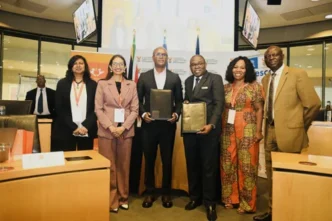
UJ’s Vice-Chancellor and Principal, Professor Letlhokwa Mpedi, signed a Memorandum of Understanding (MoU) with Minister of Communications and Digital Technologies, Solly Malatsi, to formalize the partnership between the university and the government. The agreement sets out cooperation on digital transformation, policy development, and inclusive innovation, positioning the UNESCO Chair as a vital national asset that supports South Africa’s digital diplomacy and leadership role in Africa.
Key Objectives
The partnership aims to achieve the following objectives:
- Promote digital inclusion and cultural representation in Africa’s digital media
- Develop policy and governance frameworks to address digital exclusion and the sidelining of local knowledge systems
- Support South Africa’s digital diplomacy and leadership role in Africa
Minister Malatsi emphasized the importance of partnerships in driving digital progress, stating that government alone cannot build South Africa’s digital future. He highlighted the need for collaboration across sectors, with government providing policy direction, universities contributing research capacity, industry investing in innovation, and civil society ensuring accountability and social legitimacy.