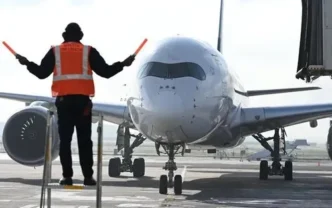
The Durban Aerotropolis Master Plan (DURAMP) was framed as one of South Africa’s most ambitious economic development plans in 2016, with a 50-year vision to reshape the spatial and economic landscape of KwaZulu-Natal by building a globally competitive airport-centred economy around King Shaka International Airport and the Dube Trade Port Special Economic Zone.
International examples such as Dubai International Airport and Amsterdam Airport Schiphol demonstrate that airports are more than points where aircraft take off and land. They have evolved into integrated ecosystems where people can live, trade, work, and travel.
Durban Aerotropolis Challenges
If such a model existed in Durban, KwaZulu-Natal could become a gateway between Africa and the world, integrating logistics, manufacturing, and trade into a high-value economic node. This would stimulate socio-economic development and help address unemployment, poverty, and inequality.
However, when measured against its own ambitions and global benchmarks, the Durban Aerotropolis remains an emerging node rather than a flourishing hub. Passenger volumes are modest, cargo throughput remains limited, and global connectivity is thin compared to other growing aerotropoli such as O.R. Tambo International Airport, Cape Town International Airport, and emerging African hubs such as Addis Ababa Bole International Airport.
Need for Strategic Pivot
Part of the explanation lies not in execution, but in structural constraints. South Africa already has an established aviation hub in O.R. Tambo International Airport in Gauteng, the country’s economic heartland. Competing directly with Johannesburg, as well as Cape Town, was always going to be difficult.
However, Durban’s competitive advantage lies elsewhere. It is home to the Port of Durban, the busiest container port in sub-Saharan Africa, according to the Transnet National Ports Authority. This advantage has not yet been fully leveraged as an integrated “air + port” logistics hub. This combination could differentiate the Durban Aerotropolis on the African continent.
Some of the key challenges and opportunities for the Durban Aerotropolis include:
- Infrastructure upgrades to improve efficiency and capacity
- Improved service delivery to enhance the overall user experience
- Enhanced safety and security measures to protect passengers and cargo
- Integration with other modes of transportation, such as rail and road, to create a seamless logistics network
By addressing these challenges and leveraging its unique advantages, the Durban Aerotropolis can shift from a largely airport-centric development model to an integrated, smart, multi-modal transport ecosystem with air and maritime at its core.