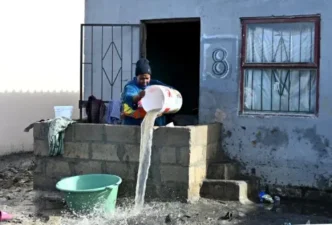

As Cape Town braces for winter, informal settlements in Dunoon remain highly vulnerable to flooding, with recent heavy rains leaving residents in Ekupholeni wading through hip-deep water and, in some cases, unable to reach their doorsteps. The City of Cape Town has pointed to blocked stormwater infrastructure and dense informal settlement growth as key contributors to recurring flooding in the area.
Civil engineering expert Dr Katelyn Johnson from Stellenbosch University notes that this situation reveals both infrastructure limitations and broader planning challenges. “Stormwater systems require regular inspection and maintenance to function properly. If a main line is inaccessible, blockages (from sediment, debris, or waste) cannot be cleared, which reduces the system’s capacity and can cause water to back up and overflow into surrounding areas,” she explained, referencing the City of Stellenbosch as an example of effective stormwater management.
Flood Risk in Informal Settlements
Residents of the Ekupholeni informal settlement are not alone in their struggle, as the City reported approximately 480 flooding-related complaints across the metro since Friday. Mayco member for Human Settlements, Carl Pophaim, said informal settlement teams were continuing assessments and providing assistance where possible. He confirmed that 206 residents with damaged roofs would receive flood kits, though the figure may change as assessments continue.
Causes of Flooding
According to Dr Johnson, settlement location plays a major role in recurring flood exposure. “Floodplains and wetlands are often the only available land for low-income communities, as they are unsuitable for formal development,” she said. The following factors contribute to flooding in informal settlements:
- Blocked stormwater infrastructure
- Dense informal settlement growth
- Lack of regular inspection and maintenance of stormwater systems
- Settlement location in flood-prone areas
The City has deployed multiple departments to affected areas, including Dunoon, Khayelitsha, Gugulethu, and Mitchells Plain. As the City continues to assist affected residents, the National Department of Human Settlements remains responsible for emergency building kit support following disasters.
For more information on flood risk management, visit the Department of Environment, Forestry and Fisheries website.