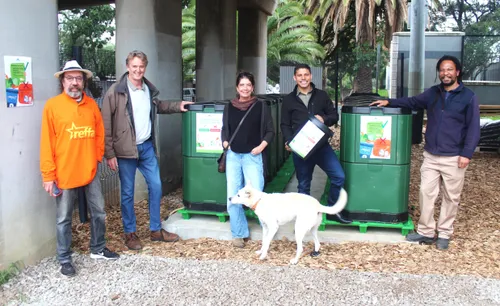
The Observatory Improvement District (OBSID) has officially opened its new community composting site, located on the corner of Oak Street and Ive Street, in a bid to provide residents with a convenient place to dispose of organic waste. According to OBSID CEO, Matt Tyrrell, the facility will convert organic waste into compost, which can be used in gardens and green spaces.
The composting site, which is a first for the area, is situated on a parcel of land beneath the bridge owned by the Passenger Rail Agency of SA (PRASA). OBSID purchased compost bins from a local City Bowl-based business for the project and got permission to use the land from PRASA. Residents will be able to drop off organic waste such as fruit and vegetable scraps, coffee grounds, tea bags, crushed eggshells, small amounts of bread and rice, cut flowers, and dead plants.
What Can Be Composted?
However, meat, dairy products, oils, plastics, and animal faeces will not be accepted. The OBSID has partnered with a local garden maintenance business, which will also operate a nursery from the site. Once the organic waste has been processed into compost, it will be sold to the public. Revenue generated from sales will help maintain the facility and support the business partner.
Ward 57 councillor, Yusuf Mohamed, welcomed the initiative, saying it would help divert waste from landfill sites. As the City of Cape Town continues to implement recycling programmes, this new composting site is a step in the right direction. Mohamed added that urban communities need to find innovative and sustainable ways to process waste.
Benefits of Composting
Composting has numerous benefits, including reducing the amount of waste sent to landfills and creating a nutrient-rich soil amendment for gardens. The OBSID Community Composting Site will be open from Monday to Saturday, from 9am to 5pm, and on Sundays from 9am to 1pm. The community initiative comes on the back of the newly launched Coastal Park Material Recovery Facility (MRF) in Muizenberg, which diverts recyclable materials from landfill by reselling them back to manufacturers to produce new products.
Here are some of the items that can be composted:
- Fruit and vegetable scraps
- Coffee grounds
- Tea bags
- Crushed eggshells
- Small amounts of bread and rice
- Cut flowers
- Dead plants
For more information on composting and recycling, visit the Wikipedia page on composting.