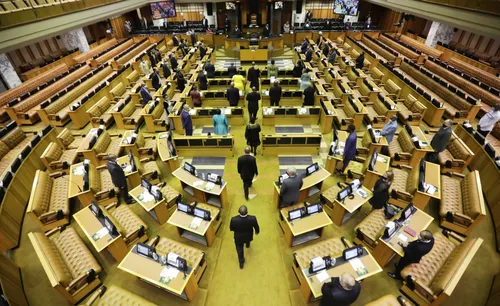
South Africa’s fight against inequality, poverty, and lawlessness is being undermined by Ministers and Members of the Executive Council (MECs) who fail to appreciate the primary role of parliament. Committees often express disappointment and anger when Ministers and MECs fail to appear, as their presence is required for crucial, high-level policy questions, and the reporting of department performance in line with the State of the Nation Address (SONA), State of the Province Address (SOPA), and their policy speeches.
Accountability in Question
The absence of Ministers and MECs from parliamentary committees has become a recurring issue, with many citing busy schedules or prior commitments as reasons for their non-attendance. However, this lack of accountability has significant implications for the country’s development, as it hinders the effective implementation of policies and programs aimed at addressing inequality and poverty. According to the South African Parliament website, the role of committees is to conduct oversight over the executive, which includes holding Ministers and MECs accountable for their actions and policies.
Consequences of Inaction
The consequences of inaction are far-reaching, with the country’s most vulnerable populations bearing the brunt of ineffective governance. A report by the Statistics South Africa highlights the persistence of inequality and poverty in the country, with many households struggling to access basic services such as healthcare, education, and social security. To address these challenges, the following reforms are necessary:
- Regular attendance of Ministers and MECs at parliamentary committees
- Strict adherence to the parliamentary schedule and timelines
- Effective communication and coordination between the executive and legislature
- Consequences for non-compliance, including sanctions and penalties
- Increased transparency and accountability in governance
By implementing these reforms, South Africa can take a significant step towards tackling inequality, poverty, and lawlessness, and ensuring that the country’s development trajectory is on track.