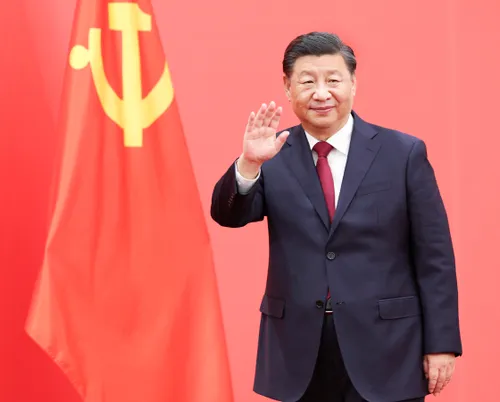
Chinese President Xi Jinping’s recent meeting with the UAE Crown Prince highlights China’s growing influence in the Middle East, proposing four key principles to foster peace and stability in the region. The meeting between Xi Jinping and Sheikh Mohammed bin Zayed Al Nahyan underscores China’s strategic interest in the region, with the Belt and Road Initiative being a major driver of this engagement.
Middle East Peace and Stability
The four-point plan outlined by Xi Jinping focuses on promoting economic development, enhancing security cooperation, advancing political dialogue, and fostering cultural exchange. This approach is seen as a significant departure from traditional Western-led initiatives, which have often been criticized for being overly focused on military intervention and regime change.
According to a report by the Brookings Institution, China’s growing economic presence in the Middle East has been accompanied by a significant increase in diplomatic engagement, with China establishing diplomatic relations with several countries in the region. This has led to a shift in the regional balance of power, with China emerging as a major player in Middle Eastern geopolitics.
Key Principles of the Plan
The four-point plan proposed by Xi Jinping can be summarized as follows:
- Promoting economic development through investment, trade, and infrastructure development
- Enhancing security cooperation through joint military exercises, counter-terrorism efforts, and intelligence sharing
- Advancing political dialogue through regular diplomatic meetings and conflict resolution mechanisms
- Fostering cultural exchange through educational programs, cultural events, and people-to-people diplomacy
The implications of this plan for South Africa are significant, as the country has long been a key player in African and international affairs. As China’s influence in the Middle East continues to grow, South Africa may find itself increasingly drawn into the region’s complex geopolitics.