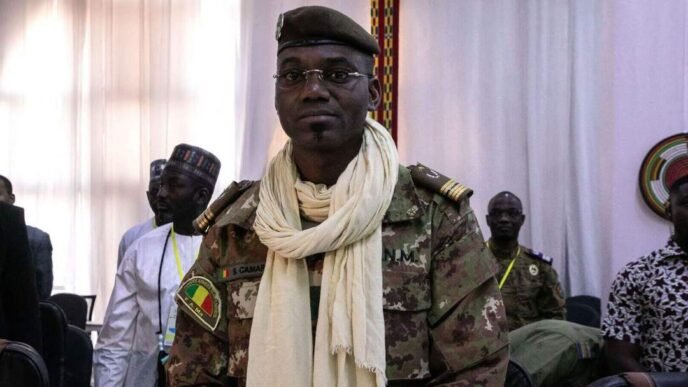

Jama’at Nusrat al-Islam wal-Muslimin (JNIM), an Al Qaeda-linked militant group, has launched a series of coordinated attacks on key cities across Mali, seizing control of two major urban centers and destroying the residence of the defense minister, according to reports from the region.
The attacks, which have been described as a major escalation in the years-long conflict, have raised concerns about the stability of the region and the ability of the Malian government to maintain control over its territory. As noted by the United Nations, the security situation in Mali has been deteriorating in recent years, with militant groups like JNIM taking advantage of the power vacuum to launch attacks on civilians and government targets.
JNIM Militant Group
JNIM, which is affiliated with Al Qaeda, has been active in the region for several years, carrying out attacks on military and civilian targets in Mali and neighboring countries. The group’s leader, Iyad Ag Ghali, is a well-known jihadist who has been involved in the conflict in Mali for decades. As explained on Wikipedia, JNIM has been responsible for numerous attacks in the region, including a 2015 assault on a hotel in Bamako that killed 20 people.
Impact on Regional Stability
The latest attacks by JNIM have raised concerns about the impact on regional stability, with many fearing that the group’s actions could spark a wider conflict in the region. The situation has been further complicated by the presence of other militant groups, including the Islamic State in the Greater Sahara (ISGS), which has also been active in the region. Some of the key concerns about the situation in Mali include:
- The potential for further violence and instability in the region
- The impact on humanitarian efforts, including the delivery of aid to affected populations
- The role of international actors, including the United Nations and the European Union, in supporting the Malian government’s efforts to maintain stability
The situation in Mali is complex and multifaceted, with a range of factors contributing to the instability and violence in the region. As the international community seeks to support the Malian government’s efforts to maintain stability, it is clear that a comprehensive approach will be needed to address the root causes of the conflict and promote peace and security in the region.