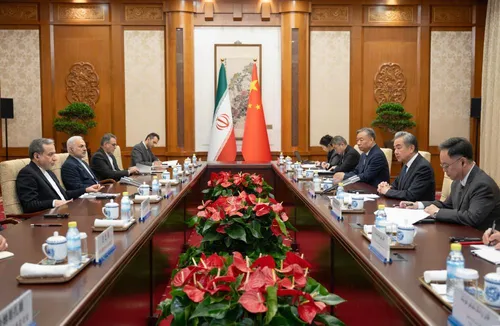
The fragile ceasefire between the United States and Iran has come under renewed strain after US forces fired on an Iranian oil tanker in the Gulf of Oman, escalating fears of another military confrontation. At the same time, the wider economic fallout from the Iran war is beginning to reshape global trade and energy markets, with China emerging as one of the countries most affected.
According to the International Energy Agency (IEA), the recent escalation in tensions has led to a 5% jump in global oil prices, which is expected to hit South African petrol prices in the coming weeks. This increase in oil prices will have a significant impact on the South African economy, particularly on the transportation and manufacturing sectors.
Impact on Global Trade and Energy Markets
The Iran-US tensions have also led to a significant shift in global trade patterns, with many countries seeking alternative sources of oil and gas. China, which is one of the largest importers of Iranian oil, has been particularly affected by the sanctions imposed on Iran. As a result, China has been forced to diversify its energy sources, with many Chinese companies investing in renewable energy and other alternative sources of energy.
Economic Resilience of China
Despite the challenges posed by the Iran-US tensions, China has shown remarkable economic resilience. According to the International Monetary Fund (IMF), China’s economy is expected to grow by 6% in 2023, making it one of the fastest-growing major economies in the world. This growth is driven by a combination of factors, including government investment in infrastructure, a growing middle class, and a shift towards more sustainable and innovative industries.
Some of the key factors that have contributed to China’s economic resilience include:
- Government investment in infrastructure, including roads, railways, and ports
- A growing middle class, with increasing demand for consumer goods and services
- A shift towards more sustainable and innovative industries, including renewable energy and electric vehicles
- A highly developed and integrated supply chain, with many Chinese companies playing a key role in global trade
Overall, the Iran-US tensions have significant implications for global trade and energy markets, and South Africa is not immune to these developments. As the situation continues to unfold, it is essential for South African businesses and policymakers to stay informed and adapt to the changing global landscape.