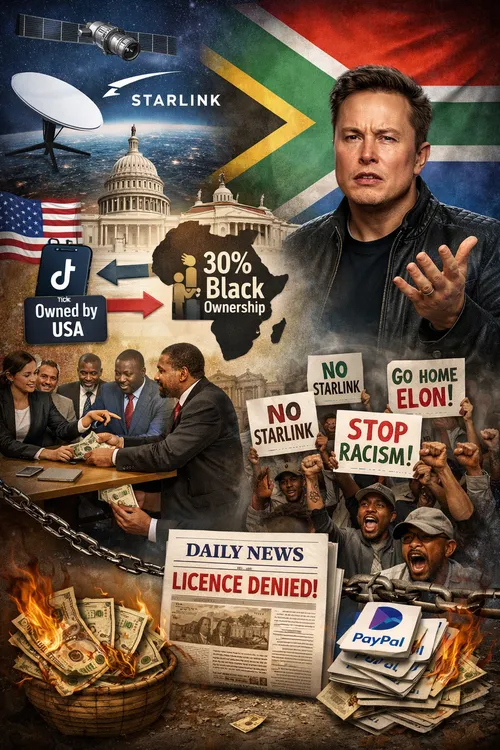
South African-born entrepreneur Elon Musk has sparked a heated debate on social media after claiming that the country’s refusal to grant his Starlink company an operating licence is due to his skin colour. Musk, who was born in Pretoria, alleges that the South African government is being racist by demanding that his company adhere to the Broad-Based Black Economic Empowerment (B-BBEE) policy, which requires 30% black ownership for electronic communications services.
The Independent Communications Authority of South Africa (ICASA) has specific rules in place for telecom licensing, including the requirement for 30% black ownership. According to the ICASA website, this policy aims to promote economic transformation and black ownership in the communications sector.
What is B-BBEE and How Does it Affect Businesses?
The B-BBEE policy is a South African government initiative aimed at promoting economic empowerment of black people. The policy requires businesses to meet certain ownership and employment targets, as well as invest in skills development and community projects. While some argue that the policy is necessary to address historical inequalities, others claim that it is unfair and discriminatory.
Reactions to Musk’s Comments
Many social media users have come out in support of Musk, arguing that the B-BBEE policy is racist and unfair. Others have defended the policy, saying that it is necessary to address the historical inequalities faced by black people in South Africa. Some have also pointed out that there are over 500 American companies operating in South Africa, many of which are led by white executives, and that the issue is not about skin colour but about complying with local regulations.
Here are some of the key points in the debate:
- The B-BBEE policy requires 30% black ownership for electronic communications services
- ICASA has specific rules in place for telecom licensing, including the requirement for black ownership
- Musk claims that the South African government is being racist by demanding that his company adhere to the B-BBEE policy
- Others argue that the policy is necessary to address historical inequalities faced by black people in South Africa
As the debate continues, it remains to be seen how the situation will unfold. One thing is certain, however: the issue of B-BBEE and its impact on businesses in South Africa is complex and multifaceted, and will require careful consideration and nuanced discussion.