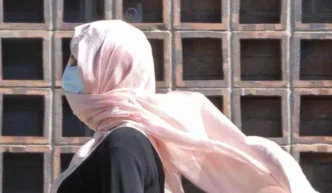
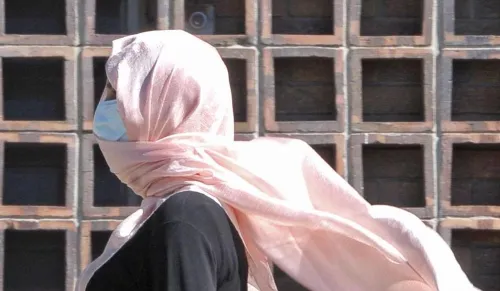
Austria’s recent headscarf ban for girls under 14 in schools has sparked widespread anger and concern among Muslims and rights groups in the country. The ban, which is set to take effect from the new school year in September, has been met with criticism from many who argue that it is discriminatory and unconstitutional. According to the Austrian government, around 12,000 girls would be affected by the new law, although this projection has been questioned as too high.
The conservative-led government argues that the law is aimed at protecting girls from ‘oppression’, but many experts and rights groups say that it is a populist measure that fails to address the real problems faced by children. Islam in Austria has been a topic of discussion for many years, with roughly eight percent of Austria’s nine million residents being Muslim, according to 2021 government statistics.
How the Ban Will Be Enforced
The education ministry has sent out information to all schools on how to enforce the new law, which includes illustrations of different Islamic head coverings. Teachers are required to instruct students to remove their headscarf if they are seen wearing one, and parents can face fines ranging from 150 to 800 euros for repeated non-compliance. Failure to report those in violation of the law could also have ‘legal consequences’ for teachers and school management.
Many have expressed their opposition to the ban, including a Vienna schoolteacher who spoke on condition of anonymity. ‘It’s a populist measure’ that fails to address ‘the real problem when parents of any religion use violence or psychological violence against children,’ she said. Last month, hundreds gathered at a central Vienna square to protest the ban before marching to the chancellery.
Years of Systematic Racism
Malika Mataeva, co-founder of the Muslim Women Network, decried ‘years of systematic, deeply rooted racism in Austria.’ ‘It’s simply another step that makes us say, ‘Enough is enough,” she said, adding that ‘guaranteed freedoms’ were not being respected. According to a 2024 report by Europe’s FRA rights agency, Muslims in Austria suffered the highest rates of racism and discrimination in the EU.
Here are some key points to consider:
- The headscarf ban is set to affect around 12,000 girls under 14 in Austrian schools.
- The ban has been met with criticism from many who argue that it is discriminatory and unconstitutional.
- The conservative-led government argues that the law is aimed at protecting girls from ‘oppression’.
- Many experts and rights groups say that the ban is a populist measure that fails to address the real problems faced by children.