The countdown to the 2026 FIFA World Cup is officially on, and history will be made when the opening match kicks off in one of North America’s most iconic football venues. The tournament, hosted jointly by the United States, Canada, and Mexico, will be the biggest FIFA World Cup yet, featuring 48 teams for the first time.
Estadio Banorte, formerly the Azteca Stadium, in Mexico City will host the opening match between Mexico and South Africa on June 11, 2026. The city is one of the oldest and largest urban centres in the Americas and sits at a high altitude of more than 2,200 metres above sea level. Known for its rich culture, historic architecture, and passionate football supporters, Mexico City has long been regarded as one of the sport’s spiritual homes.
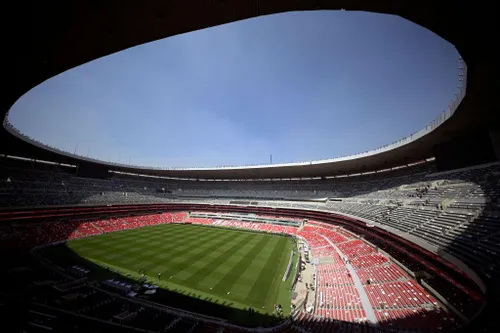
Estadio Banorte: A Legendary Venue
Estadio Banorte has been renamed following a R1.71 billion sponsorship deal with Banorte bank to fund extensive, two-year renovations in preparation for hosting the opening game of the 2026 FIFA World Cup. The iconic 60-year-old venue is undergoing a massive modernization to meet strict FIFA standards, featuring a new hybrid pitch, upgraded seating for over 87,000 spectators, improved hospitality areas, and enhanced LED lighting and high-speed Wi-Fi throughout.
As stated on the FIFA official website, Estadio Banorte will host five matches during the 2026 FIFA World Cup. The stadium is also home to Mexican football giants Club América and the Mexico national football team.
What to Expect
Football fans can expect an exhilarating experience at Estadio Banorte, with its rich history and state-of-the-art facilities. Here are a few things to note:
- Estadio Banorte will become the first stadium in history to host three FIFA World Cup opening matches.
- The stadium has hosted the 1970 World Cup final, where Pelé led the Brazil national football team to victory over Italy.
- It also staged the unforgettable 1986 quarter-final between Argentina and England, where Diego Maradona scored both the famous “Hand of God” goal and the “Goal of the Century”.
For more information on the 2026 FIFA World Cup, visit the 2026 FIFA World Cup Wikipedia page for the latest updates and news.