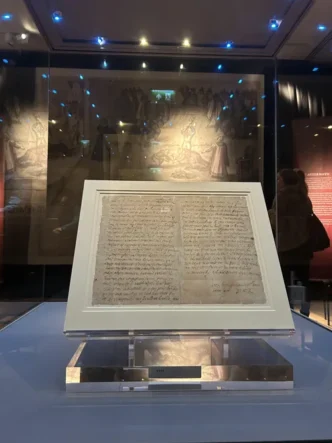
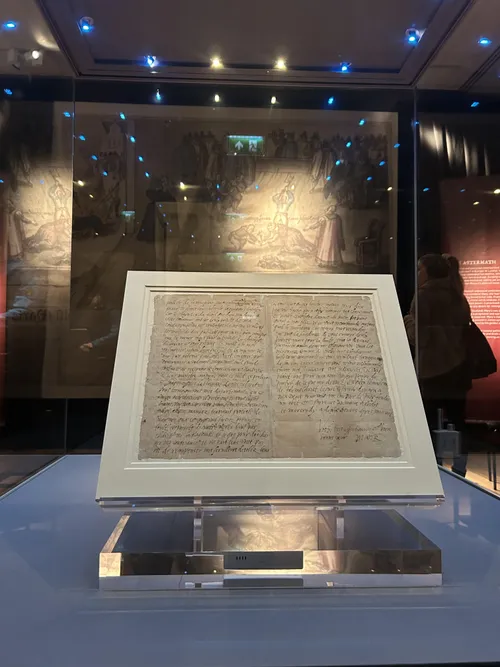
While eating dinner on February 7, 1587, Mary, Queen of Scots, was told her two decades in prison for alleged treason were finally over – but not in a good way. Her head would be chopped off the next morning. Mary Stuart thanked her hosts, went back to her chambers and penned a letter, which has survived for over 430 years and is now on display at the Perth Museum in southern Scotland.
Historical Significance
The letter, written to her brother-in-law, King Henry III of France, is a significant piece of history, as it showcases Mary’s thoughts and feelings before her execution. According to the Wikipedia page on Mary, Queen of Scots, she was a Catholic martyr and a symbol of Scottish identity. The letter has been preserved and is now available for the public to view, offering a unique glimpse into the life of the doomed queen.
The Perth Museum, a new cultural and heritage center, has attracted large crowds since the letter went on display in late January. Visitors, like Midge Williams, who traveled from northern England to see the manuscript, are fascinated by the personal and historical significance of the letter. “It makes me feel very emotional, to be honest,” said Williams, who first heard of the letter from her late Scottish mother.
Preservation and Display
The letter has been preserved through various methods, including journeys by horseback and sailing ship, and has survived the French Revolution and nearly unbroken climate-controlled darkness for the last century. The Perth Museum has taken extensive measures to ensure the letter’s preservation, including displaying it in a controlled environment.
Some of the key points of the letter include:
- Mary’s address to her brother-in-law, King Henry III of France
- Her request for her servants to be paid
- Her wish for her body to be transported to France
- Her construction of a deliberate narrative of her own death as a victim of anti-Catholic hysteria
The letter is a significant piece of history, offering insights into the life and thoughts of Mary, Queen of Scots. As noted by the Britannica page on Mary, Queen of Scots, she was a complex figure, and the letter provides a unique perspective on her life and legacy.