JOHANNESBURG, South Africa — In a nation where the economic divide is often measured in miles between suburbs and townships, a new metric has emerged from the glass towers of Sandton and Stellenbosch: the R200,000-a-day executive.
As of early 2026, the remuneration reports for South Africa’s largest financial institutions have revealed a stratosphere of wealth that remains resilient despite a volatile global economy. Leading the pack is Gerrie Fourie, the recently retired architect of Capitec’s retail empire, whose final exit package pushed him into a league of his own.
The R100 Million Club
The headline figures are staggering. Gerrie Fourie, who stepped down as Capitec CEO in July 2025, ended his tenure on a historic high. His “single-figure” remuneration—a combination of base salary, short-term bonuses, and the vesting of long-term incentives (LTI)—totaled a massive R105 million.
When broken down into a 365-day calendar, Fourie’s earnings equate to roughly R287,671 per day. This 60% increase from the prior year was fueled by Capitec’s aggressive 52% share price surge, proving that in the world of high finance, the rewards for market dominance are exponential.
The Titans of Standard and Investec
Close on his heels is Sim Tshabalala, the Group CEO of Standard Bank. In the 2025 financial year, Tshabalala’s compensation rose by 7% to R89.22 million. For the leader of Africa’s largest bank by assets, this translates to roughly R244,000 every single day. His package is a complex tapestry of fixed pay (R11.9 million) and a heavy weighting of performance-linked rewards that vested as the bank’s headline earnings climbed.
Meanwhile, Fani Titi of Investec remains a fixture of the elite, though his journey reflects the volatility of the sterling-rand exchange. Despite a strategic reduction in fixed pay and a significant 35.9% drop in total remuneration compared to his record-breaking 2024, Titi still took home R82 million (£3.4 million). Even with the “pay cut,” Titi earns approximately R224,658 per day—more than many mid-level professionals earn in a year.
The Anatomy of an Executive Paycheck
For the average South African, these figures can feel abstract. To provide a sense of scale: the median formally employed worker in South Africa would need to work for nearly a year to match what these executives earn before their first coffee break on a Monday morning.
However, the banks defend these packages as necessary to retain “global-tier talent.” The modern banking CEO is no longer just a manager of deposits; they are tech moguls, risk navigators, and geopolitical strategists. Much of this wealth is not “cash in hand” but share-based incentives that are locked away for years, contingent on the bank hitting strict performance targets.
A Changing Guard
The 2026 landscape is also one of transition. While the “Big Three” top the daily earnings chart, the rest of the sector is seeing a shift in leadership:
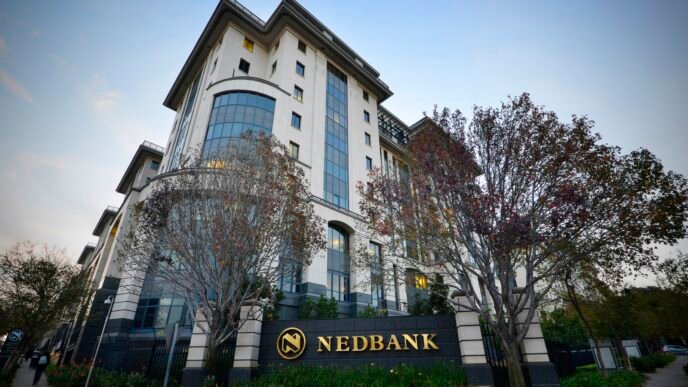
- Nedbank: Following the retirement of Mike Brown (who averaged R94,000 a day over 15 years), new CEO Jason Quinn is beginning his tenure with a package that emphasizes future growth over immediate payout.
- FirstRand: Mary Vilakazi has taken the helm, earning a total remuneration of roughly R41 million, as the group navigates a more conservative post-pandemic strategy.
- Absa: After a period of leadership flux, interim CEO Charles Russon is overseeing a stabilization that saw executive pay stay relatively flat at R30 million for the top spot.
As these figures go public, they inevitably reignite the debate over income inequality in South Africa. Yet, as long as the “Big Five” continue to deliver dividends to shareholders and stability to the national economy, the price of leadership at the top of the food chain remains one of the most expensive—and lucrative—line items in corporate South Africa.
Source Credit: This report is based on data and analysis provided by BusinessTech and recent annual integrated reports from Capitec, Standard Bank, and Investec.