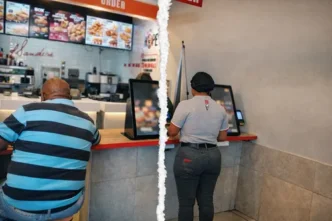

As South Africa embraces technological advancements, self-checkout machines are becoming increasingly common in retail stores, with some major chains reporting a 30% rise in their use over the past year. The shift towards automation has sparked a heated debate among consumers, with some welcoming the convenience and others expressing concerns about job losses.
Convenience vs Job Security
For Andile Bhengu, a 23-year-old shopper, self-checkout machines offer a fast and easy way to complete his purchases. “I find it very easy to use because it saves time by not going to the cashiers and being in the queue,” he said. However, Bhengu also stressed that stores should not rush to replace human workers, as this could exacerbate the country’s already high unemployment rate.
Kuhle Mhlongo, a grocery store worker, shares a different perspective. “I can understand why customers welcome it. It gets super crowded at the stores sometimes and people have to wait in line. But I would like to believe that customers can handle a few minutes of waiting if it means I can save my job,” she said. Mhlongo also highlighted the importance of human workers in assisting customers with disabilities or difficulties using the machines.
Impact on Employment
The rise of self-checkout machines has significant implications for employment in the retail sector. According to the South African Statistics Agency, the country’s unemployment rate has been steadily increasing over the past few years. The introduction of automation technologies could further exacerbate this issue, particularly for low-skilled workers.
To mitigate the negative effects, some experts suggest that retailers should invest in retraining programs for workers who may be displaced by automation. This could include training in areas such as customer service, inventory management, or IT support. Others propose that the government should implement policies to support workers who lose their jobs due to automation, such as providing financial assistance or career counseling.
Here are some potential solutions to address the impact of self-checkout machines on employment:
- Retraining programs for displaced workers
- Investment in customer service and support roles
- Government support for workers affected by automation
- Encouraging retailers to maintain a balance between automation and human workers
As the retail industry continues to evolve, it is essential to consider the social and economic implications of technological advancements. By finding a balance between convenience and job security, retailers can ensure that the benefits of automation are shared by all stakeholders, including customers, workers, and the broader community.