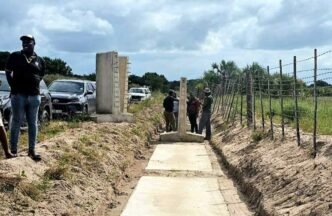

MANGUZI, South Africa — For the residents of kzn uMkhanyakude District, the border between South Africa and Mozambique is more than a line on a map it is a point of vulnerability. In northern KwaZulu-Natal, a project meant to be a fortress—a 25-kilometer concrete barrier wall—stands as a haunting metaphor for government delays, leaving local communities exposed to a relentless tide of cross-border syndicates.
As of late January 2026, the promise of security remains partially built. While Phase One has seen significant progress, the gaps in the wall have become the new frontline for hijackers, smugglers, and those who profit from the porous wilderness.
The Wall That Corruption Built (and Halted)
The project, initiated in 2018, was designed to stop the easy flow of stolen vehicles and livestock into Mozambique. The “Jersey barriers”—massive concrete blocks—were hailed as a definitive solution. However, the project’s history is as jagged as the terrain it covers.
In 2021, the Special Investigating Unit (SIU) froze the project to probe an R85.7 million tender that had allegedly paid out R48 million for less than a single kilometer of construction. This pause didn’t just halt the machines; it opened the door for crime syndicates to regroup. When construction finally resumed under the direction of the provincial government, it was against a backdrop of “massive social pressure” following the murders of community leaders who had stood against the gangs.
The Efficiency of the Completed Sections
Where the wall is finished, it works. KZN Transport officials have noted that the 8km segment near Tembe Elephant Park has effectively disrupted traditional hijacking routes. There are documented cases of stolen SUVs found abandoned, literally hanging off the concrete barriers after criminals realized they could no longer drive them across the boundary.
“According to local crime-fighting structures, the number of hijacked vehicles dropped significantly in areas where the wall is complete,” noted MEC Siboniso Duma in recent briefings. “But criminals are not stupid; they simply look for the gaps.”
Living in the Gaps
For those living near the unfinished Phases Two and Three, the situation is increasingly dire. These sections, which are meant to link the iSimangaliso Wetland Park to the Phongolo River, remain the primary exit points for high-end vehicles stolen from as far away as Gauteng.
The communities of Manguzi, Jozini, and Mbazwana remain “under siege.” Residents describe a nightly reality of armed abductions and home invasions. The syndicates operating here are sophisticated, often using iron ladders to bypass smaller obstacles or exploiting the dense bush where the concrete line simply stops.
The Call for National Intervention
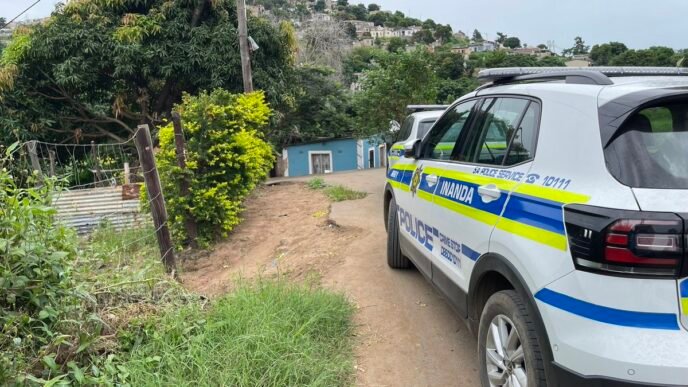
KZN Premier Thami Ntuli has increasingly called for the national government to treat the KZN-Mozambique border with the same urgency as a military operation. While over 140 police officers and members of the South African National Defence Force (SANDF) are deployed to the region, the lack of a physical, continuous barrier makes their job a game of “cat and mouse” across a massive, rugged landscape.
The government has projected that Phases Two and Three—estimated to cost another R270 million—will take until late 2027 to complete, provided funding and environmental approvals remain on track. For the people of northern KZN, however, a “few years” is a lifetime when your car, your livestock, or your life could be taken across the border in a matter of minutes.
As the sun sets over the uMkhanyakude bush, the unfinished wall remains—a testament to what security could be, and a reminder of the dangerous work that remains.
Source Credit: This report is based on coverage from News24 and project updates from the KZN Department of Transport