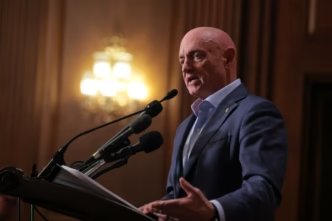

Defense Secretary Pete Hegseth announced Monday that the Pentagon will slash the military retirement pay of Senator Mark Kelly, calling the Arizona Democrat’s public statements “seditious” for reminding service members they have a duty to refuse illegal orders.
The move marks an unprecedented use of military justice against a sitting U.S. senator and raises serious questions about First Amendment protections for retired service members.
What Happened
Kelly, a retired Navy captain and former astronaut, appeared in a November video alongside five other Democratic lawmakers—all veterans or former national security officials. In the video, they urged military personnel and intelligence community members to remember their oath to the Constitution includes refusing illegal orders.
“Threats to our Constitution are coming from right here at home,” the lawmakers said in the video.
The video didn’t specify which orders might be illegal, but came amid bipartisan congressional concerns about the legality of U.S. military strikes against suspected drug boats in the Caribbean and military deployments to cities over governors’ objections.
The Punishment
Hegseth issued a formal letter of censure accusing Kelly of “seditious statements” and a “pattern of reckless misconduct.” The Pentagon initiated proceedings to reduce Kelly’s retirement rank, which would result in lower retirement pay.
Kelly has 30 days to respond to the charges. The process must be completed within 45 days.
In his censure letter, Hegseth wrote that Kelly’s conduct demonstrates “specific intent to counsel servicemembers to refuse lawful orders” and has had “a detrimental impact on military discipline and good order.”
The letter also includes an apparent threat: “If you continue to engage in conduct prejudicial to good order and discipline, you may subject yourself to criminal prosecution or further administrative action.”
Kelly Fires Back
The senator responded with defiance Monday morning.
“If Pete Hegseth, the most unqualified Secretary of Defense in our country’s history, thinks he can intimidate me with a censure or threats to demote me or prosecute me, he still doesn’t get it,” Kelly wrote on X. “I will fight this with everything I’ve got.”
Kelly emphasized his service record: 25 years in the Navy, 39 combat missions, four space shuttle missions, and commanding a shuttle while his wife, former Congresswoman Gabby Giffords, recovered from being shot in the head.
“My rank and retirement are things that I earned through my service and sacrifice for this country. I got shot at. I missed holidays and birthdays,” Kelly said. “Pete Hegseth wants to send the message to every single retired servicemember that if they say something he or Donald Trump doesn’t like, they will come after them the same way. It’s outrageous and it is wrong.”
Bipartisan Concerns
Not all Republicans support the Pentagon’s action.
Senator Roger Wicker, a Republican who chairs the Senate Armed Services Committee, told CNN last month it’s not appropriate for the military to punish Kelly. When asked directly if it’s appropriate, Wicker shook his head and replied simply: “No.”
Senate Minority Leader Chuck Schumer condemned the move Monday: “Mark Kelly is a hero and a patriot committed to serving the American people.”
Why This Matters
Unlike the other five lawmakers in the video, Kelly is the only one who retired from military service rather than simply separating. That means he remains subject to the Uniform Code of Military Justice and receives military retirement pay.
But legal experts question whether the Pentagon can punish a sitting senator for political speech, even if he’s technically still subject to military law.
The case raises fundamental questions: Can retired military officers speak freely about their government? Does military justice trump the First Amendment for retirees who served their country? And should the Pentagon be targeting political opponents of the administration?
Kelly framed it as a broader threat: “Pete Hegseth and Donald Trump don’t get to decide what Americans in this country get to say about their government.”
What Happens Next
The Pentagon has ruled out recalling Kelly to active duty for court-martial proceedings—the most severe option they’d considered.
Kelly has 30 days to file a response. His lawyers are expected to challenge both the legality and constitutionality of punishing a senator for political speech.
The case will likely drag on for months, potentially reaching federal courts where judges will have to balance military justice against constitutional protections for free speech.
Meanwhile, the message has been sent: retired service members who speak out against the administration may face consequences—even if they’re United States senators.