Harish Rana, the first person in India granted permission for passive euthanasia, has passed away after remaining in a vegetative state for more than 13 years. Rana, 31, had been in a permanent vegetative state since 2013 following a severe head injury. His family had been seeking permission for passive euthanasia, which was finally granted by the Supreme Court on March 11.
The Supreme Court allowed passive euthanasia for Rana, permitting the withdrawal of life support under strict medical supervision. A Bench of Justices JB Pardiwala and KV Viswanathan ruled that the medical board could exercise its clinical judgement in line with the principles laid down in the landmark 2018 judgment in Common Cause vs Union of India, which recognised the legality of passive euthanasia and living wills.
Background of the Case
Rana’s family had filed a petition before the Delhi High Court, seeking permission for passive euthanasia. However, the High Court had earlier declined relief, prompting the family to move to the Supreme Court. During earlier hearings, the apex court explored alternatives, including home-based medical care, after the Union government proposed assistance such as nursing support, physiotherapy, and free medicines.
However, the family later approached the Supreme Court again, citing deterioration in his condition and lack of improvement despite prolonged treatment. After reserving its verdict in January, the top court delivered its judgment allowing passive euthanasia, marking a significant moment in India’s evolving legal and ethical discourse on end-of-life care.
Reaction from the Family and Authorities
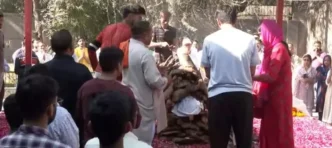
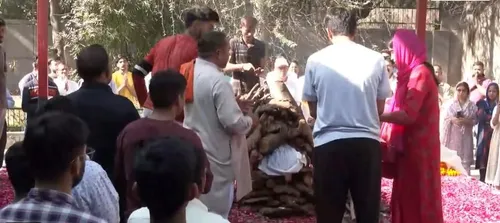
Rana’s brother, Ashish Rana, and sister, Bhavna, performed the final rites at New Delhi’s Green Park cremation ground. Uttar Pradesh Congress President Ajay Rai was also present to offer support to the family. “The family is certainly in a very sad and serious situation, and today, after 13 years, they were unable to save their child. Harish Rana also donated five organs as he left the world. He became an inspiration to the world,” Rai said.
Here are some key points to note about the case:
- Rana was in a permanent vegetative state for over 13 years
- The Supreme Court granted permission for passive euthanasia on March 11
- Rana’s family had been seeking permission for passive euthanasia for several years
- The case has significant implications for India’s laws on end-of-life care
For more information on the right to die, visit the World Health Organization website.