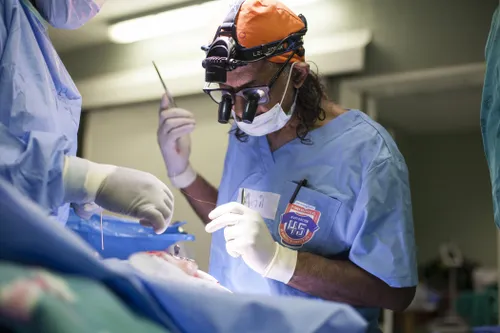
Twenty years after its first surgical programme, Operation Smile South Africa (OSSA) continues to change lives across the continent, giving hope to children and adults born with cleft lips and palates. It all started in Empangeni in northern KZN in 2006 when almost 100 people arrived at its first surgical programme; 59 eventually received free cleft surgery that transformed their lives forever.
Professor Anil Madaree, the Medical Director of Operation Smile South Africa, says the impact of cleft surgery is immediate and profound. “You see it on the patient’s face, on the family’s face. It’s the satisfaction that you can make a meaningful change. There’s nothing quite like it in surgery,” he said.
Cleft Lip and Palate Surgery
According to the Wikipedia page on cleft lip and palate, the condition affects approximately 1 in 700 births worldwide. Madaree says for some families the transformation goes beyond appearance. “One mother told me, for the first time, I could kiss my child,” Madaree recalls. “Before the surgery, her lips were apart. She couldn’t.”
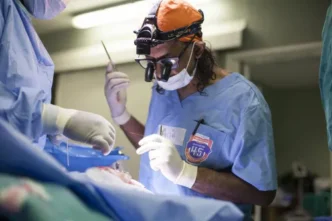
Through OSSA, Madaree, who heads the Department of Plastic and Reconstructive Surgery at the Nelson R Mandela School of Medicine at UKZN and has served as President of the Colleges of Medicine of South Africa since 2010, is at the helm of one of Africa’s most impactful volunteer-driven healthcare initiatives. To date, the organisation has performed over 6 000 cleft lip and palate surgeries, supported by more than 150 volunteer medical professionals, including surgeons, nurses, anaesthetists, speech therapists and social workers.
Impact of Cleft Lip and Palate
A cleft lip can have a significant social impact, while a cleft palate can have more serious medical consequences. “You can’t eat properly, you regurgitate and recurrent ear infections are common,” he said. “There’s a social impact because if you’ve got a cleft palate, you can’t speak, you speak very funny, no one can understand you.”
OSSA has worked across sub-Saharan Africa, changing lives in communities where specialised surgical care is often difficult to access, including the Democratic Republic of the Congo, Mozambique, Ghana, Kenya, Madagascar, Rwanda and Malawi. Some of the key countries and number of surgeries performed include:
- South Africa: over 3 000 surgeries
- Democratic Republic of the Congo: over 1 000 surgeries
- Mozambique: over 500 surgeries
Madaree stresses that the medical side of cleft care is just as critical as the social impact. Lip repairs are usually performed within the first three to four months after birth, while palates are best repaired before the first year to support normal speech development. “Even if you do the surgery later, at 50, 60, or even 70 years old, there’s still a meaningful improvement,” he said.
For more information on cleft lip and palate, visit the World Health Organization page on cleft lip and palate.</p)