
Violence erupted in KuGompo City, formerly East London, as a protest against the installation of Chief Solomon Ogbonna Eziko as the leader of the Igbo people turned chaotic. The march, which included thousands of locals as well as representatives from various political parties and rights groups, began peacefully but later took a turn for the worse, catching police off guard.
According to the South African Government website, the country’s constitutional laws are clear on the recognition of traditional leaders. However, the coronation of a Nigerian national as king in KuGompo City has drawn strong condemnation from many locals and others across the country.
Protest Turns Violent
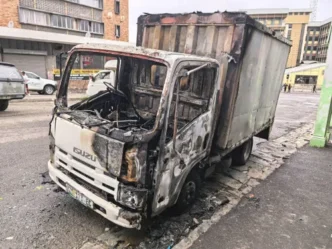
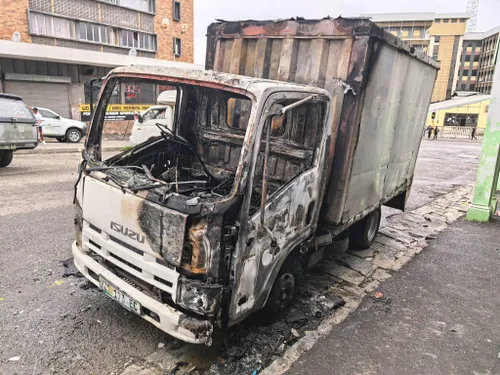
As the crowd grew during the march, so too did tensions. Reports indicate that at least 12 vehicles were torched, and several businesses owned by foreign nationals were ransacked. The stabbing of a young man may have been the catalyst for the chaos, although the exact trigger for the violence remains unclear.
The SAPS Eastern Cape spokesperson, Brigadier Nobuntu Katana, confirmed that police were initially unprepared for the rapid escalation, having deployed limited resources in anticipation of a peaceful protest before calling in reinforcements. “We can confirm that we have deployed public order policing in response to the violence. Our visible policing units, together with Buffalo City traffic and law enforcement officers, have been deployed to maintain order.”
Community Frustration
Bambilizwe Sigcawu, a member of the Amaxhosa royal family, described the community’s frustration over the coronation, which he said undermined South Africa’s constitutional laws. “Nobody can come from wherever and undermine the authority of this country, especially this kingdom,” Sigcawu said. He reiterated calls for the South African government to act swiftly against what he termed an illegal coronation, demanding that all who participated in the ceremony be expelled from the country, regardless of their legal status.
Some of the key concerns raised by the community include:
- The recognition of a foreign national as a traditional leader in South Africa
- The potential impact on the country’s constitutional laws and traditional leadership structures
- The perceived disregard for the authority of the South African government
As tensions continue to rise, it remains to be seen how the situation will unfold. The South African government has yet to comment on the matter, but it is clear that the community will not stand idly by while their concerns are ignored.