Minister of Employment and Labour Nomakhosazana Meth has disclosed that R6.08 million in claims have been made against six textile companies in Newcastle, following a series of labour inspections that uncovered widespread non-compliance with the country’s employment laws.
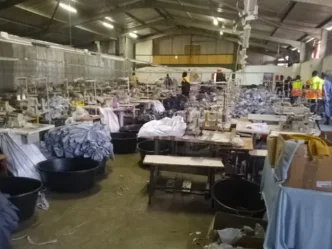
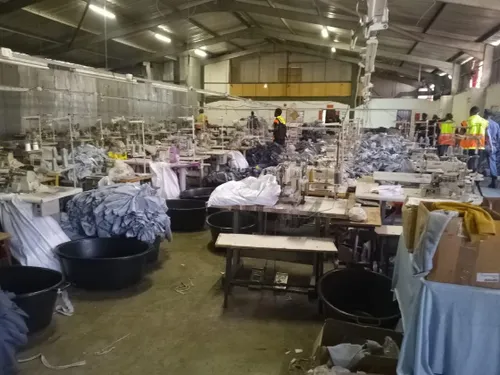
Last month, the Department found that several factories in Newcastle had employed undocumented foreign nationals and were in breach of labour and occupational health and safety laws, including unsafe working conditions and non-compliant facilities.
Labour Inspections and Enforcement
Responding to a parliamentary question from uMkhonto we Sizwe MP LD Selepe, Meth said the department had already conducted enforcement actions. The Department conducted a strategic advocacy session on the 10 March 2026 with the Chinese employers in the Textile Industry in Newcastle to advocate for employment laws, and subsequently will implement its interventions from April 2026 to promote and improve sustainable compliance.
Consequences of Non-Compliance
All enforcement notices, except on OHSA, have expired, and the Department is referring them to CCMA. The Department of Trade and Industry (DTIC) has stated that South African manufacturing cannot grow on the back of unsafe and illegal operations. South Africa cannot grow its manufacturing base on the back of unsafe and illegal operations. Factories that evade labour standards distort competition, undermine compliant businesses, and expose vulnerable workers to unacceptable conditions.
The objectives of the Retail Clothing, Textiles, Footwear and Leather Masterplan are grounded in the principle that industrial growth must occur within a sound governance framework of decent work, lawful business activity, and formalisation of the value chain. Some of the key issues that the Department has identified include:
- Employment of undocumented foreign nationals
- Breach of labour and occupational health and safety laws
- Unsafe working conditions and non-compliant facilities
These issues have significant consequences for the workers, the companies, and the economy as a whole. It is essential that the Department continues to conduct regular labour inspections and enforcement actions to ensure that companies comply with the country’s employment laws.