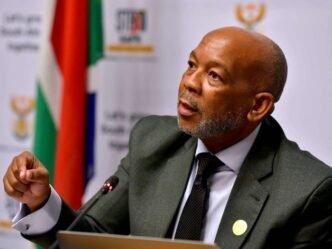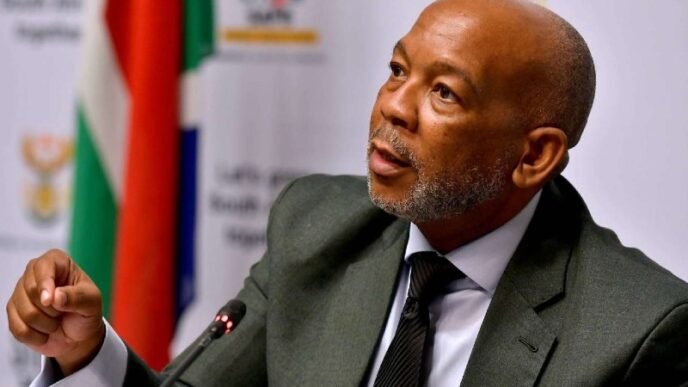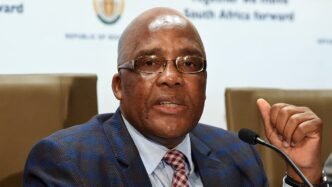

PRETORIA, South Africa — Health Minister Dr. Aaron Motsoaledi has assured the nation that South Africa’s healthcare system remains robust and resilient following the formal completion of the United States’ withdrawal from the World Health Organization (WHO) on January 23, 2026.
The U.S. exit, initiated exactly one year ago under President Donald Trump’s administration, concludes a significant shift in global health diplomacy. Despite the loss of the WHO’s largest financial contributor, Motsoaledi emphasized that South Africa has spent the past year “preparing for this eventuality” and strengthening its own domestic and regional health frameworks.
The Resilience Strategy
Speaking to Business Report and the media on Sunday, January 25, Motsoaledi highlighted that South Africa’s response to external funding shocks has moved from “panic to proactive planning.”
- Reduced Dependency: The Minister noted that South Africa already funds roughly 90% of its HIV and TB programs from its own fiscus. “We have proven with the PEPFAR withdrawal that we are not a country that collapses when aid is pulled. We are a country that reprioritizes and survives,” he stated.
- Emergency Funding: To mitigate the broader impact of U.S. budget cuts seen throughout 2025, National Treasury has already released over R750 million in emergency funds to support provincial health departments and research institutions like the SAMRC.
- Global Fund Support: South Africa continues to work closely with the Global Fund, which recently pledged an additional R1 billion to assist in the procurement of vital antiretroviral (ARV) treatments.
A New Multilateral Order
Motsoaledi’s address underscored a shift toward “Health Sovereignty,” arguing that the U.S. withdrawal serves as a wake-up call for the African continent to bolster the Africa CDC and local manufacturing hubs.
“The WHO remains a critical partner for the global south,” Motsoaledi remarked. “While we regret the U.S. decision, we accept it with resilience. We will continue to collaborate with the WHO to ensure that global health standards are maintained, with or without Washington’s presence.”
The Global Impact of the U.S. Exit
The joint statement by U.S. Health Secretary Robert F. Kennedy Jr. and Secretary of State Marco Rubio cited the WHO’s “mishandling” of the COVID-19 pandemic and a “failure to reform” as the primary reasons for the departure.
However, health experts in South Africa warn that the U.S. will now lose its seat at the table in the Global Influenza Surveillance and Response System, potentially hampering its own ability to monitor emerging flu strains—a move many local scientists have dubbed “scientifically reckless.”
Looking Ahead
The WHO Executive Board is set to meet on February 2, 2026, to discuss the formal notification of withdrawal and the resulting budget gap. For South Africa, the focus remains firmly on the rollout of the National Health Insurance (NHI) and ensuring that the most vulnerable populations are shielded from the shifting tides of international politics.