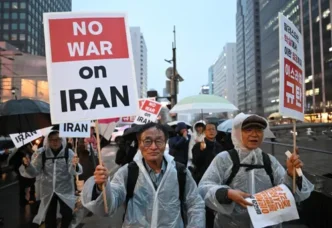
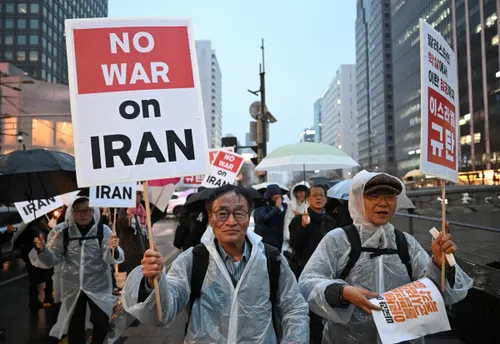
The escalating conflict in the Middle East has sparked a stark warning from the South African Chamber of Commerce and Industry (Sacci), with CEO Alan Mukoki stating that the crisis is already destabilising global markets and poses a serious threat to South Africa’s economic recovery prospects.
The war, which has disrupted shipping routes and pushed oil prices sharply higher, is triggering ripple effects across the global economy that are being felt in emerging markets such as South Africa. Brent crude traded above $113 per barrel on Monday after earlier touching $115 as investors reacted to renewed tensions and uncertainty over the reopening of the Strait of Hormuz, one of the world’s most critical energy corridors, as explained on the Wikipedia page on the Strait of Hormuz.
Impact on Global Supply Chains
The narrow waterway carries roughly a fifth of global oil supplies, and any disruption has an immediate impact on global prices and shipping costs. Mukoki said the conflict had evolved beyond a regional dispute and was now dragging the broader global community into an “unsustainable conflagration”.
The rise in the oil price and the blockages happening in international waters in terms of trade and the movement of ships and goods will definitely have a significant effect on global supply chains. He warned that the consequences would filter quickly into domestic economic indicators, with higher fuel costs feeding into inflation and, in turn, forcing central banks to keep interest rates higher for longer.
Consequences for South Africa
Sacci said the knock-on effects of the conflict were likely to show up in deteriorating economic indicators globally, including slower growth, rising inflation, volatile exchange rates and increased commodity price swings. For South Africa, which is already grappling with structural constraints, weak growth and fiscal pressure, the external shock could derail the modest recovery that had begun to take shape.
Some of the key consequences for South Africa include:
- Disrupted exports and imports
- Delayed shipments
- Raised insurance and logistics costs
Recent reports indicate that tanker traffic through the Strait of Hormuz has been severely curtailed, forcing shipping companies to reroute vessels and raising freight and insurance costs across global supply chains. Mukoki said these disruptions were already filtering into global financial markets, contributing to volatility in equities and currencies, as well as rising energy and transport costs.