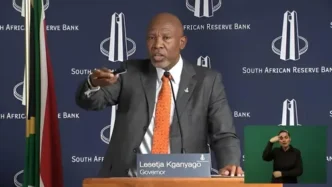
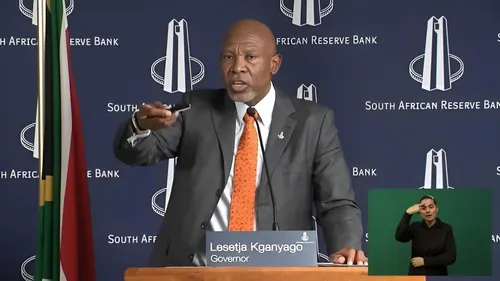
The South African Reserve Bank (SARB) has decided to keep interest rates steady at 10.25%, despite rising inflation risks due to the ongoing war in the Middle East. According to SARB Governor Lesetja Kganyago, the bank’s projections indicate that interest rates will remain unchanged for a longer period, postponing the previously expected cuts.
The prime lending rate in South Africa has been cut six times between September 2024 and November 2025, dropping a cumulative 1.5 percentage points. However, with the current inflationary outlook, economists suggest that the SARB may start hiking rates in the not-too-distant future if the war persists. As the South African Reserve Bank monitors the situation, it is clear that the coming months will be crucial for assessing the longer-term inflation consequences.
Rising Inflation Risks
The Governor noted that inflation risks were to the upside, and that depending on how long the war lasts, inflation could potentially exceed 5%. This is concerning, as Statistics South Africa reported that inflation came in at 3% for February, which is spot on target. However, with oil prices increasing by 50.78% over the past month, it is likely that fuel prices will drive the next leg of inflation, with hikes of as much as R6 for petrol and R11 for diesel set to hit the pumps on April 1.
Impact on the Economy
Independent economist Elize Kruger warned that the scale of the increase could be unprecedented, and that these increases will be the highest ever to be implemented in a single month in South Africa. She added that this could likely derail the fragile economic recovery envisaged for South Africa in 2026. Some of the key factors that will be affected by the rising inflation include:
- Fuel prices, which will increase by as much as R6 for petrol and R11 for diesel
- The rand, which is trading at November 2025 lows, at R17.10
- Oil prices, which are up 50.78% over the past month
As the situation continues to unfold, it is clear that the SARB will be watching inflation closely, especially for second-round effects from higher fuel and input costs. With the current uncertainty, it is essential for South Africans to be prepared for the potential impact on the economy and their personal finances.