President Cyril Ramaphosa has reaffirmed South Africa’s commitment to the International Court of Justice (ICJ) case against Israel, following the submission of Israel’s response to the genocide claims. The ICJ case, filed in 2024, aims to hold Israel accountable for its actions in Gaza, which have resulted in the loss of countless lives and widespread destruction.
The presidency stated that Israel’s response comes after two extensions were granted by the court, allowing Israel to submit its arguments on July 28, 2025. South Africa will now review Israel’s response and decide on the next course of action, which may include requesting permission for further written submissions or proceeding to the oral phase of proceedings.
Support from Pro-Palestine Organisations
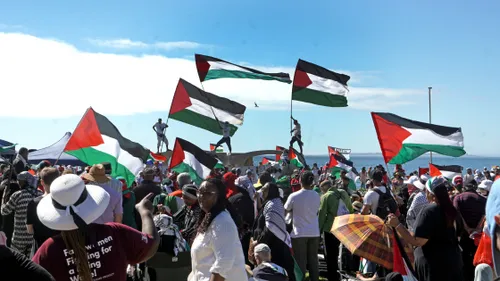
South African Jews for a Free Palestine (SAJFP) and the Palestinian Solidarity Alliance (PSA) have welcomed Ramaphosa’s statement, expressing their support for the ICJ case. SAJFP noted that while they support the case, it is imperative that Israel cease all acts of aggression and be held accountable for its actions. The organisation also highlighted the contradiction between South Africa’s stance on the ICJ case and its role as the number one supplier of coal to Israel, which is used to fuel Israel’s military operations.
The PSA praised South Africa’s initiative, stating that it represents a historic and principled effort to uphold international law and protect civilians through legal and diplomatic means. The organisation also welcomed the growing international support for South Africa’s initiative, citing the decision by the Netherlands and Iceland to join proceedings in support of South Africa.
International Law and the Genocide Convention
The Genocide Convention, as outlined on the United Nations website, imposes a legal and moral obligation on states to act when credible allegations of genocide arise. The ICJ case against Israel is a significant step towards holding the country accountable for its actions in Gaza and upholding the principles of international law.
Some key points to consider in the ICJ case include:
- The submission of Israel’s response to the genocide claims
- South Africa’s decision on the next course of action, which may include requesting permission for further written submissions or proceeding to the oral phase of proceedings
- The growing international support for South Africa’s initiative, including the decision by the Netherlands and Iceland to join proceedings
- The implications of the ICJ case for the ongoing conflict in Gaza and the broader Middle East region
As the ICJ case against Israel continues to unfold, it is clear that the international community is watching closely. The outcome of the case will have significant implications for the future of the conflict in Gaza and the role of international law in holding states accountable for their actions.