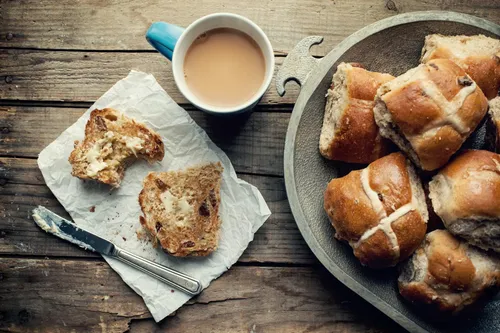
Hot cross buns have become a staple in South African households during the Easter season. But have you ever wondered where this tradition originated? The history of hot cross buns dates back to 12th century England, where a monk marked buns with a cross to honour Good Friday, the day Christians remember the crucifixion of Jesus.
Over time, the tradition stuck, and the cross on top of the bun became a symbol of faith, while the spices inside were said to represent those used to embalm Jesus after his death. According to Wikipedia, the exact origin of hot cross buns is unclear, but it’s believed that they were first baked by monks in the 12th century.
What’s Behind the Tradition?
For many, the simple cross on top of the bun represents the crucifixion, while for others, it’s just part of the bun’s identity. Interestingly, there were also old beliefs around these buns. In parts of England, people thought a hot cross bun baked on Good Friday would never go mouldy. Some even kept one in the kitchen for good luck or protection.
Hot Cross Buns in South Africa
In South Africa, hot cross buns have become a seasonal staple, appearing weeks before Easter and disappearing just as quickly after. Local bakeries and big retailers alike have put their own spin on them, with flavours ranging from apple cinnamon to caramel and chocolate chip. You can find more information on the different types of hot cross buns on the South African Tourism website.
Here are some fun facts about hot cross buns:
- They were originally made with just flour, water, and salt.
- The cross on top of the bun is typically made from a mixture of flour and water.
- Hot cross buns are a popular treat in many countries, including the UK, Australia, and New Zealand.
Part of the charm of hot cross buns is the nostalgia. For many South Africans, they’re tied to family, school holidays, and slower mornings during the Easter break. They’re also easy – you don’t need a big meal or a special occasion. Just a toasted bun, a bit of butter, and a cup of tea.