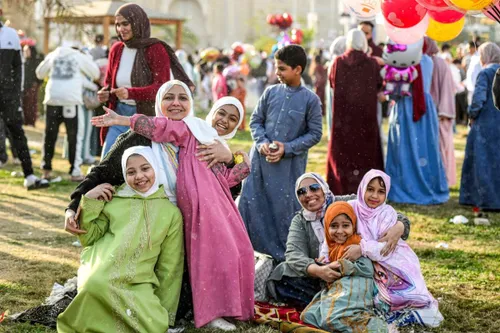
As the holy month of Ramadan comes to a close, Muslims in Cape Town are preparing to celebrate Eid al-Fitr, a time of gratitude and reflection amidst ongoing global conflicts and local challenges. The Cape Town Ulama Board has called on the community to observe Eid with a sense of balance between celebration and concern, highlighting the plight of those in Palestine, Iran, and other parts of the world.
The non-sighting of the crescent moon on Thursday evening confirmed that Ramadan concluded after a full 30 days, with communities across the city gathering to mark Eid al-Fitr this weekend. Secretary of the Cape Town Ulama Board, Shaykh Sayed Ridhwaan, drew attention to the situation at Masjid al-Aqsa, where access to the sacred site was restricted during Ramadan, as well as the ongoing plight of people in Palestine and Iran.
Eid al-Fitr and Global Struggles
We witness the relentless trials in Palestine, where the steadfastness of the people remains a beacon of light for the oppressed everywhere, said Ridhwaan. He also brought the focus closer to home, warning that the impact of violence and social decay in parts of Cape Town mirrors the instability seen abroad. For us in Cape Town, these global struggles are mirrored in the ‘war zones’ of our own doorsteps, he said, referencing ongoing gang violence and drug abuse on the Cape Flats.
According to the Palestine Wikipedia page, the Israeli-Palestinian conflict has resulted in significant humanitarian and economic impacts on the region. The Muslim Judicial Council South Africa (MJCSA) also issued a message of encouragement and unity, with Sheikh Riad Fitaar emphasising the spiritual significance of Eid.
Lessons of Ramadan
On the Mubarak occasion of Eid al-Fitr, the Muslim Judicial Council extends its heartfelt greetings to the Muslim Ummah of Cape Town, South Africa, and the global Ummah. We thank Allah for granting us Ramadan and enabling us to fast, to make salah, to give sadaqat and to draw closer to Him, said Fitaar. He reminded worshippers of the deeper meaning of fasting, noting that the fasting person has two joys, one at the time of breaking the fast and one when we meet Allah, as narrated in Hadith.
Here are some key takeaways from the messages of the Cape Town Ulama Board and the Muslim Judicial Council South Africa:
- Embracing Eid with gratitude and reflection amidst global struggles
- Recognising the plight of those in Palestine, Iran, and other parts of the world
- Addressing the impact of violence and social decay in local communities
- Strengthening family ties and showing kindness to neighbours
- Supporting those in need and fostering unity within diverse communities
Both religious bodies stressed that Eid is not only a time of festivity but also an opportunity for reflection, growth, and collective responsibility for rebuilding safer, more united communities.