
After Venezuela: Trump Sets Sights on Cuba and Greenland
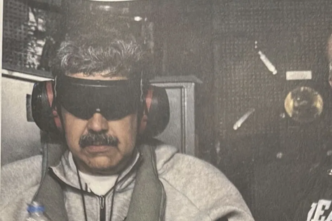
One day after U.S. forces captured Venezuelan President Nicolás Maduro in a pre-dawn raid, President Donald Trump made clear the operation was just the beginning of what he calls a new American approach to the Western Hemisphere.
In interviews Sunday, Trump renewed his push to take control of Greenland and suggested Cuba’s communist government may be next on his list. The message to allies and adversaries alike: Who’s next?
The Cuba Connection
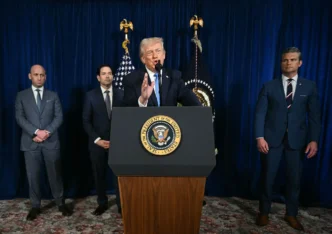
Secretary of State Marco Rubio delivered a pointed warning to Havana: “If I lived in Havana and I was in the government, I’d be concerned.”
Rubio revealed the extent of Cuban involvement in propping up Maduro’s regime. Cuban operatives controlled Maduro’s personal security, ran Venezuela’s internal intelligence apparatus, and monitored his government for potential traitors. Maduro wasn’t even protected by Venezuelan bodyguards—all his security came from Cuba.
Cuba’s Ministry of the Interior confirmed Sunday that 32 Cuban military and police officers died during the U.S. operation. Trump acknowledged the deaths bluntly: “Many Cubans died last night. They were protecting Maduro. That was not a wise decision.”
Cuban President Miguel Díaz-Canel called the Venezuela operation “state terrorism” and warned that “the threat hangs over all of us.” At a government-organized rally in Havana, he led chants of “Down with imperialism” and declared Cubans were willing to give “even our own blood” for Venezuela.
But Trump predicted Cuba would simply collapse without Venezuela’s support. “I think it’s just going to fall,” he told reporters aboard Air Force One. “I don’t think we need any action. Looks like it’s going down for the count.”
For two decades, Venezuela has kept Cuba afloat with cheap oil and financial support. Without that lifeline, analysts say the already struggling Cuban regime faces an existential crisis.
Greenland Back in Play
Trump also doubled down on his push to acquire Greenland from Denmark, describing the Arctic territory as strategically critical because it’s “surrounded by Russian and Chinese ships.”
Asked what the Venezuela operation might mean for Greenland, Trump replied: “They are going to have to view it themselves. I really don’t know.”
Danish Prime Minister Mette Frederiksen issued a sharp rebuke, reminding Trump that he has “no right to annex” the territory. She urged the U.S. to “stop threatening a historically close ally” and emphasized that Greenland has made clear it’s “not for sale.”
Denmark already provides the U.S. broad access to Greenland through existing NATO agreements. But Trump has repeatedly refused to rule out using military force to take control of the mineral-rich island.
Tensions escalated further when Katie Miller, a former Trump administration official married to deputy chief of staff Stephen Miller, posted an image of Greenland colored like the American flag with the caption “SOON.”
Denmark’s ambassador to Washington responded pointedly: “We expect full respect for the territorial integrity of the Kingdom of Denmark.”
A New Doctrine
Trump framed his actions through historical U.S. foreign policy, citing the Monroe Doctrine of the 1800s, which rejected European colonialism in the Americas, and the Roosevelt Corollary, which the U.S. used to justify intervention throughout Latin America.
His administration’s National Security Strategy identifies “restoring American preeminence in the Western Hemisphere” as a central goal. The Venezuela operation, Trump said, was necessary because China, Iran, and Russia had violated “the core principles of American foreign policy, dating back more than two centuries.”
But the aggressive approach has drawn criticism even from allies. The European Union issued a statement emphasizing “the right of the Venezuelan people to determine their future must be respected” as Trump vows to “run” Venezuela through an interim government.
Democratic Senator Mark Warner raised concerns about precedent: “Does this mean any large country can indict the ruler of a smaller adjacent country and take that person out?”
What It Means
The Venezuela operation has fundamentally shifted the geopolitical landscape of the Caribbean and Latin America. Cuba loses its main economic backer. Denmark faces renewed pressure over Greenland. And every government in the region now wonders if they might be next.
As one ordinary Cuban put it, watching events unfold in Venezuela: “It can happen in any country, it can happen right here. We have always been in the crosshairs.”