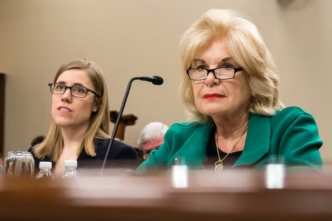

The Corporation for Public Broadcasting officially closed Monday, ending nearly six decades of federal support for PBS, NPR, and more than 1,500 local stations nationwide.
CPB’s board voted to dissolve rather than leave the organization “vulnerable to future political manipulation or misuse” after Congress eliminated $1.1 billion in federal funding last summer at President Trump’s request.
What CPB Did
Created by Congress in 1967, CPB distributed federal funds to public media outlets. About 70% went directly to local stations—many in rural or underserved communities—while the rest supported programs like “Sesame Street” and independent filmmakers.
For small rural stations, federal support often meant the difference between staying on air or going dark.
Why It’s Closing
Republicans have long accused public broadcasting of liberal bias. Trump escalated the criticism last July, writing on Truth Social: “Any Republican that votes to allow this monstrosity to continue broadcasting will not have my support or Endorsement.”
Congress stripped CPB of funding already approved for the next two fiscal years. The organization laid off most of its roughly 100 employees by September.
CPB leaders decided dissolution was safer than keeping the organization dormant. “CPB’s final act would be to protect the integrity of the public media system and the democratic values by dissolving, rather than allowing the organization to remain defunded and vulnerable to additional attacks,” said president Patricia Harrison.
What Happens Now?
PBS and NPR will continue—they’re separate organizations. But local stations face an uncertain future.
NPR estimates as many as 80 member stations may close within a year. Some PBS stations have already shut down or gone independent to save money on membership fees.
Donations have increased since the cuts were announced, but whether that surge continues long-term remains unclear.
Public Support Didn’t Matter
Polls consistently showed Americans valued public broadcasting. PBS ranked as the most trusted media institution for years. Surveys found majorities supported continuing federal funding.
Despite this, Congress moved ahead with elimination. Of 29,000 public comments submitted on the cuts, only 1.4% favored defunding.
Looking Forward
“Public media remains essential to a healthy democracy,” Harrison said. “Our hope is that future leaders and generations will recognize its value, defend its independence, and continue the work of ensuring that trustworthy, educational, and community-centered media remains accessible to all Americans.”
For now, public broadcasting faces an uncertain future—still alive, but without the federal structure that sustained it for more than half a century.