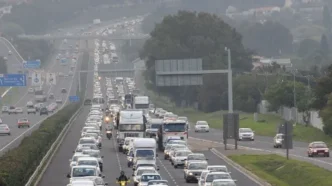

The City of Cape Town has announced that it will not be introducing a congestion charge in its current draft budget, bringing relief to motorists who were concerned about the potential added expense. Mayco member for Urban Mobility, Rob Quintas, clarified that the city is not considering a congestion tax, despite previous reports suggesting that it was an option on the table.
According to Quintas, the confusion arose from the city’s Travel Demand Management (TDM) Strategy, which was open for public comment last November. The strategy references a range of theoretical measures, including congestion charges, but Quintas emphasized that such a charge would only be considered if public transport was a reliable and effective travel option, which is not currently the case.
Congestion Charge Concerns
The idea of a congestion charge had been met with concern from residents and stakeholders, including GOOD Party Councillor Sandra Dickson, who argued that it would place an unfair burden on households that are already struggling with rising municipal costs. Dickson also questioned the city’s public participation process for the 2026/27 Draft Budget, which she felt did not provide adequate opportunity for residents to provide input.
Quintas noted that the city is currently reviewing and incorporating feedback from residents and stakeholders on the TDM Strategy, and is focused on implementing practical, near-term measures to improve mobility for all residents. These measures include investing in more reliable and integrated public transport, expanding park-and-ride facilities, and improving walking and cycling infrastructure. As the city’s transport system continues to evolve, it is likely that residents will be keeping a close eye on any future developments, and can visit the City of Cape Town’s website for updates on the city’s transport plans.
What This Means for Residents
So what does the decision not to introduce a congestion charge mean for residents? For one, it means that motorists will not have to worry about the added expense of a congestion charge, at least for the time being. However, it also means that the city will need to explore other options for generating revenue to fund its public transport system. Some possible options could include:
- Increasing funding for public transport through the city’s budget
- Implementing a park-and-ride system to encourage the use of public transport
- Improving walking and cycling infrastructure to reduce the number of cars on the road
As the city continues to grapple with the challenges of providing effective and efficient public transport, residents can expect to see a range of initiatives and proposals aimed at addressing these issues. For now, at least, the decision not to introduce a congestion charge is a welcome relief for many.