The Artemis II crew has entered the Moon’s sphere of influence, where lunar gravity now leads their journey. Aboard the Orion capsule, they are set to travel farther from Earth than any humans before, marking the first lunar flyby since 1972. As they entered the moon’s gravitational influence, the crew was about 63 000km from the moon and about 232 000 miles (about 373 000 km) from Earth, a NASA official said on the agency’s livestream of the event.
Historic Occasion for the Crew
The historic occasion comes alongside a constellation of firsts for the crew of three Americans and one Canadian. Victor Glover will go down in the books as the first person of colour to fly around the moon, and Christina Koch will be the first woman. Canadian Jeremy Hansen, meanwhile, will become the first non-American to accomplish the feat.
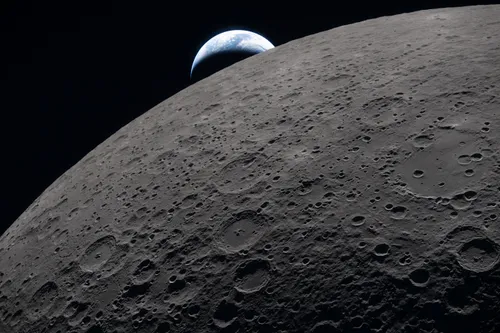
Those three, along with mission commander Reid Wiseman, will spend much of their lunar flyby documenting the moon. The astronauts have already started seeing features of the celestial body never before viewed with a naked human eye. In the wee hours of Sunday, NASA published an image taken by the Artemis crew that showed a distant moon with the Orientale basin visible.
Key Features of the Mission
The crew will witness a solar eclipse, when the sun will be behind the moon and hidden from view aside from its outermost atmosphere, the solar corona. The four astronauts will also spend some time testing their “Orion crew survival system” spacesuits. The orange suits protect the crew members during launch and re-entry, but are also available for emergency use – they can provide up to six days of breathable air.
Some key aspects of the mission include:
- First lunar flyby since 1972
- Farthest distance from Earth for humans
- First person of colour to fly around the moon
- First woman to fly around the moon
- First non-American to fly around the moon
As the crew continues on their historic journey, they will be providing valuable insights and data that will help inform future missions to the moon and beyond. For more information on the mission, visit the Artemis program page on Wikipedia.