
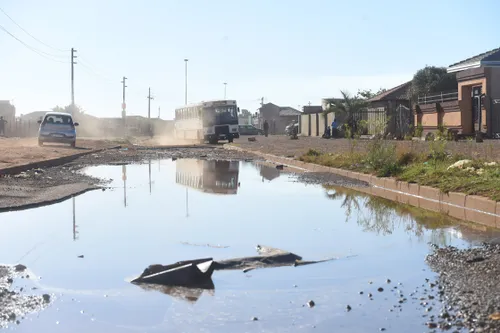
South Africa’s local government problem is not only that municipalities are weak, but also that the system has become too elaborate for many municipalities to govern, says Burgert Gildenhuys, the founder of BC Gildenhuys & Associates. Writing in the Urban Pulse SA March 2026 newsletter, he says that for years, the standard explanation for the country’s local government failures has sounded almost beyond dispute.
“Municipalities are struggling because they lack skills. They do not have enough competent engineers, financial managers, planners, project managers, accountants, technicians and administrators. They are under-capacitated. They need more training, more support, more intervention and more oversight.” There is truth in that diagnosis, says BC Gildenhuys & Associates, as the latest official findings show that municipal weakness is real.
The Auditor-General’s 2023/24 municipal audit outcomes show that only 41 municipalities achieved clean audits, while many others remained unqualified with findings, qualified, adverse or disclaimed. National Treasury has also reported that 162 municipalities were in financial distress as at 30 June 2024. Its 2023/24 MFMA compliance report further records vacancies in critical senior posts such as chief risk officers, chief audit executives and heads of assets.
Capacity for What?
So yes, municipalities often do lack people, systems and institutional stability, says Gildenhuys. However he says that is precisely why the next question matters. “Why does this problem recur so persistently, so widely and so structurally? Why has it survived wave after wave of reform, support programmes, turn-around plans and national interventions? At some point, one has to stop asking only why municipalities are weak and start asking whether the system itself has been designed in a way that predictably produces weakness.”
This is where the mainstream story begins to unravel, he says. The founder says: “Capacity” is usually spoken about as if it were a neutral concept, when it is not. “Capacity for what? Capacity to keep roads usable, run water schemes, collect refuse, maintain substations, process local permits and manage basic finance? Or capacity to comply with a dense web of national planning frameworks, procurement rules, reporting requirements, audit expectations, project coding standards, ERP systems, institutional mandates and central oversight routines?”
Persistent Problems
He argues that those are two very different things. The first set of tasks is about delivering basic services to citizens, while the second set is about complying with a complex web of rules and regulations. Some of the key challenges facing municipalities include:
- Lack of skilled personnel
- Inadequate infrastructure
- Insufficient funding
- Complex regulatory requirements
As the National Treasury continues to grapple with the challenges facing municipalities, it is clear that a new approach is needed. One that takes into account the complexities of the system and the needs of citizens.