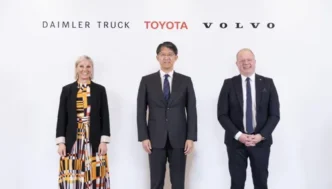

Toyota has announced a strategic partnership with Volvo and Daimler Truck to accelerate the development of hydrogen fuel cell technology for heavy-duty transport, aiming to lead the way in decarbonising the transport sector. This move is expected to have a significant impact on the global trucking industry, with the potential to reduce greenhouse gas emissions by up to 90%.
Hydrogen Fuel Cell Technology
Hydrogen fuel cell technology has been gaining traction in recent years, with many companies investing heavily in research and development. According to the International Energy Agency, hydrogen fuel cell technology has the potential to play a key role in the transition to a low-carbon economy.
The partnership between Toyota, Volvo, and Daimler Truck is expected to drive innovation and reduce costs in the development of hydrogen fuel cell technology. The companies will work together to develop a range of hydrogen fuel cell products, including trucks, buses, and trains.
Benefits of Hydrogen Fuel Cell Technology
The benefits of hydrogen fuel cell technology are numerous, including:
- Zero greenhouse gas emissions
- Improved air quality
- Reduced noise pollution
- Increased energy efficiency
In South Africa, the adoption of hydrogen fuel cell technology could have a significant impact on the environment and the economy. With the country’s rich natural resources and growing demand for clean energy, hydrogen fuel cell technology could play a key role in the transition to a low-carbon economy.
As the world continues to transition to a low-carbon economy, the development of hydrogen fuel cell technology is expected to play a key role. With the partnership between Toyota, Volvo, and Daimler Truck, the future of hydrogen fuel cell technology looks promising. For more information on hydrogen fuel cell technology, visit the Wikipedia page on the topic.