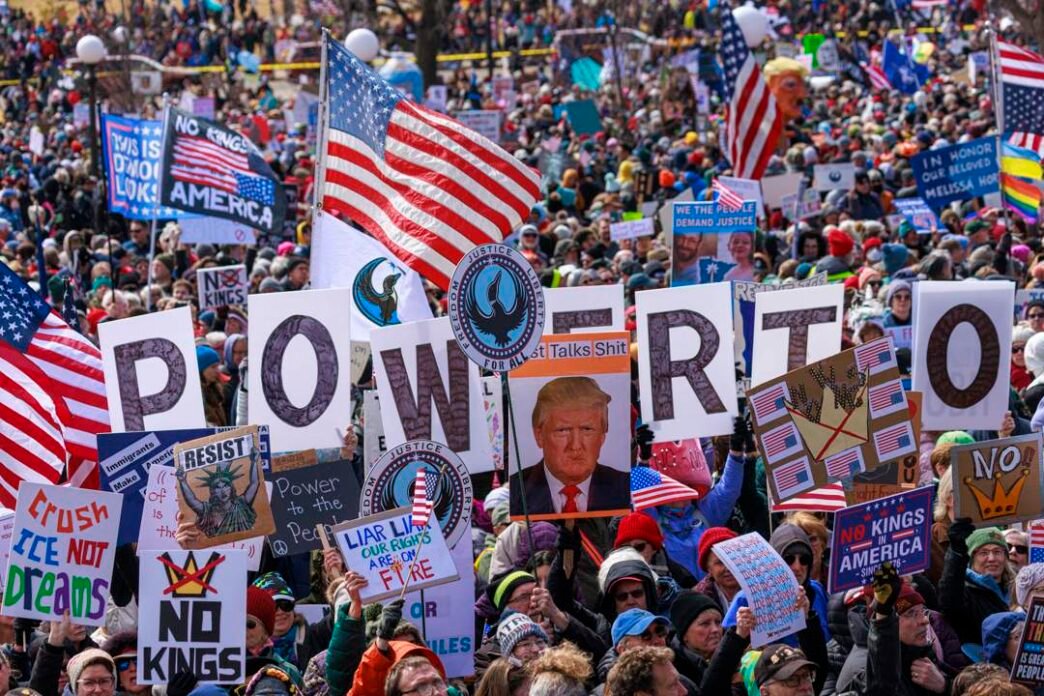
Millions of people across the United States and beyond took to the streets on Saturday to protest against President Donald Trump, venting their fury over what they see as his authoritarian bent and law-trampling governance. The protests, which coincided with the ‘No Kings’ day, saw people from all walks of life gathering in major cities to express their discontent with the Trump administration.
Why the Protests Matter
The protests are a significant indication of the growing dissatisfaction with the Trump administration, with many people feeling that the president is undermining the country’s democratic institutions. As noted on the official White House website, the president has been accused of making controversial decisions that have far-reaching implications for the country and the world.
According to reports, the protests were largely peaceful, with demonstrators carrying signs and banners that read ‘Not My President’ and ‘Resist Trump’. The protests were also marked by a sense of solidarity, with people from different racial and ethnic backgrounds coming together to voice their opposition to the Trump administration. For more information on the protests, visit the Wikipedia page on the 2017 Women’s March, which provides a comprehensive overview of the movement.
Key Demands of the Protesters
The protesters have made several key demands, including:
- An end to the Trump administration’s divisive policies
- Greater transparency and accountability in government
- Protection of human rights and the environment
The protests have also sparked a wider debate about the role of the president and the limits of executive power. As the country grapples with these complex issues, one thing is clear: the protests against Trump are a powerful reminder of the importance of citizen engagement and activism in a democratic society.