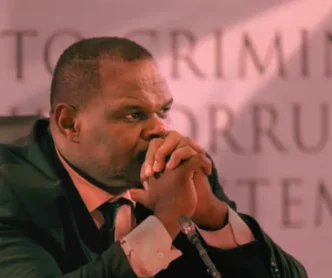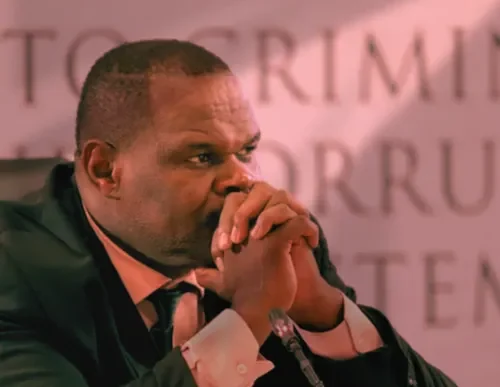

The South African Police Service (SAPS) Commissioner, General Fannie Masemola, has been served with a summons to appear in the Pretoria Magistrate’s Court on April 21, in connection with the R360 million SAPS health services tender awarded to Vusimuzi “Cat” Matlala’s company.
This development has raised significant questions about the accountability of heads of departments and the prevalence of corruption within South Africa’s public service. The National Prosecuting Authority confirmed that Masemola has been charged under Section 38 of the Public Finance Management Act (PFMA), which places certain responsibilities on heads of departments, including ensuring that a department has effective, efficient, and transparent systems of financial and risk management and internal control.
Corruption Accountability in the Public Sector
Political analysts have welcomed this development as a long-overdue step in enforcing accountability among those in leadership positions within the public sector. According to political analyst Dirk Kotze, the action against Masemola was something that should have happened a long time ago with all accounting officers in the public service, where there is corruption.
“If they don’t have proper systems in place for accountability and preventing corruption, they become co-responsible for it. Although it’s not that they benefit from it personally, they have the legal responsibility to make sure that the state does not lose its assets,” said Kotze.
Previous Trends in Holding Public Servants Accountable
Kotze noted that the previous trends in holding only identified personnel accountable left a crucial gap in responsibility. “It’s not that they are, therefore, accused of corruption per se, but they are accused of not performing their functions properly,” he added.
Another political analyst, Andre Duvenhage, pointed out that despite the well-documented violations of the PFMA across national and provincial departments, political will has often been lacking to address these infractions. “It is not news that we have a huge problem and it’s also not news that there’s no action taken by politicians to bring in responsible government,” he said.
Both Kotze and Duvenhage expressed a hope that this summons could mark the beginning of a more extensive process aimed at holding public servants accountable for their actions. Some of the key aspects of this process include:
- Ensuring that heads of departments are held accountable for corruption and mismanagement
- Implementing effective systems of financial and risk management and internal control
- Providing training and resources to public servants to prevent corruption
As the case against Masemola unfolds, it is likely to have significant implications for the public sector and the fight against corruption in South Africa.