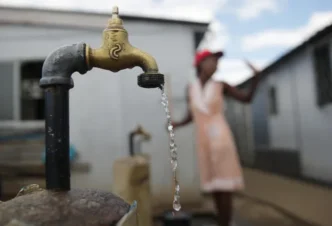

South Africa’s water systems are failing, with 12 towns running dry due to broken pipes, aging infrastructure, and municipal mismanagement. The dreaded Day Zero has arrived, but not as a single national water apocalypse, instead as a network of towns struggling with prolonged outages, erratic supply, and dry reservoirs.
According to water management specialist Professor Anthony Turton, the country faces induced scarcity rather than environmental scarcity. “If we take into consideration the total water resource of the country and we factor in the reserve (Basic Human Needs and Ecological Flows) then we ran out of water in 2002. However, at the moment we have a relative abundance because most dams are more than full. We can therefore think of an induced scarcity. This is a localized scarcity caused by institutional failure somewhere along the total supply chain,” he said.
Induced Scarcity
Turton explains that small towns have been deeply impacted but generally under-reported. The South African government has acknowledged the risk in major metros, but Durban is actually at higher risk. The current approach is to apply inappropriate solutions to misdiagnosed problems, which is profitable and lies at the heart of the business model sustaining the water mafia.
Solutions
Turton believes that Cape Town has become the “blueprint” for the country with its diversified mix that includes the desalination of seawater, recovery of water from waste, and managed aquifer recharge. These three platforms are reliable and have been successfully implemented in water-constrained cities like Perth and Melbourne. The technologies are robust and the economics are understood.
Some of the key factors contributing to the water crisis include:
- Drought
- Delayed bulk and resource
- Ineffective catchment management agencies
- Infrastructure failures
- Flood disaster impacts
- Ageing treatment plants
- Electricity disruptions
- Poor source availability
The South African Local Government Association (SALGA) concurs that the country is not facing one single “national Day Zero,” but rather a series of localised water security crises driven by different factors. As the water scarcity crisis deepens, it is essential to address the institutional failures and implement effective solutions to ensure a water-secure future for all South Africans.