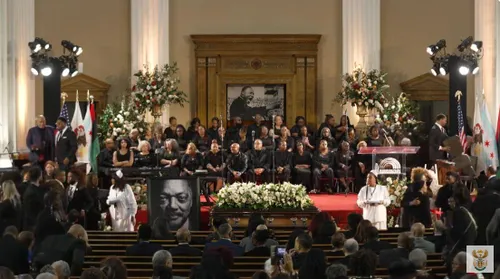
South African President Cyril Ramaphosa is set to deliver a tribute to the late US civil rights leader, Rev. Dr Jesse Jackson, at his Celebration of Life in Chicago on Saturday. Ramaphosa arrived at Chicago’s O’Hare International Airport on Friday and will deliver his tribute during the Private Homegoing Celebration at the Rainbow Push Coalition headquarters.
Rev. Jackson passed away on Tuesday at the age of 84, leaving behind a legacy of fighting for racial equality and social justice. Ramaphosa has expressed his deep sadness at the passing of Rev. Jackson, praising his campaigns against apartheid and his support for the liberation struggle.
Jesse Jackson’s Legacy
Rev. Jackson spent more than six decades amplifying African American voices on the national stage. He was a close associate of Martin Luther King Jr. and witnessed pivotal moments in the fight for racial equality. Jackson also made his mark in American politics, running for president twice in the 1980s and forcing African American issues onto the Democratic Party platform.
Some of Rev. Jackson’s notable achievements include:
- Founding Operation PUSH and the National Rainbow Coalition, which merged in 1996 to continue his advocacy for civil rights and economic opportunity
- Receiving South Africa’s National Order of the Companions of OR Tambo in Silver in 2013 for his dedication to challenging societies and governments to recognize that all people are born equal
- Supporting George Floyd’s family following the 2021 conviction of his killer
Civil Rights Leader
Rev. Jackson’s commitment to social justice was unwavering, despite personal challenges, including his battle with Parkinson’s disease. He remained a steadfast voice for justice, famously declaring, “It’s a long struggle for racial equality in this country.” For more information on Rev. Jackson’s life and legacy, visit the Rainbow Push Coalition website.
As the world mourns the loss of Rev. Jackson, his legacy will continue to inspire future generations to fight for racial equality and social justice. You can also read more about his life and legacy on The New York Times.