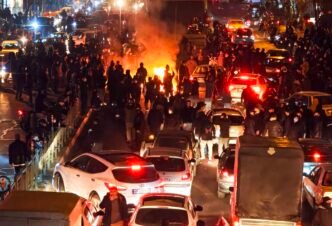

In a move that has reignited fierce debate over the moral consistency of Pretoria’s foreign policy, South Africa was among the nations that abstained from a crucial United Nations Human Rights Council (UNHRC) vote on Friday, January 23, 2026.
The vote sought to establish an independent, international fact-finding mission to investigate the “deteriorating human rights situation” in Iran, where state-led repression of mass protests has reportedly left thousands dead. While 21 members of the 47-nation council supported the urgent probe, South Africa’s refusal to back the measure has drawn sharp rebukes from human rights advocates and domestic opposition.
The Factual Breakdown of the Vote
- The Resolution: The Council voted to convene an emergency special session to investigate “alleged human rights violations” in the Islamic Republic of Iran related to protests that began in late 2025.
- The Outcome: The resolution passed despite the abstentions. The 47-member council was divided, with Western nations largely in favor and a bloc of “Global South” and BRICS+ nations either voting against or abstaining.
- South Africa’s Stance: Pretoria chose to abstain, neither supporting the investigation nor explicitly voting against it.
The “Selective Morality” Controversy
The abstention has placed the African National Congress (ANC) under a microscope, with critics pointing to a glaring dichotomy in South Africa’s international posture.
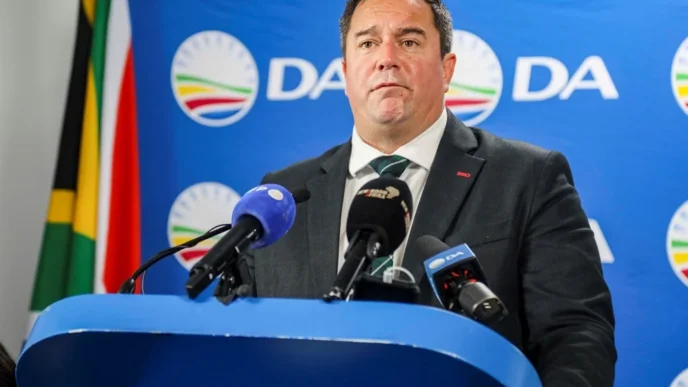
The Democratic Alliance (DA) issued a stinging response, accusing the government of “selective morality.” The party highlighted the contrast between South Africa’s aggressive legal action against Israel at the International Court of Justice (ICJ) and its “muted” response to atrocities committed by a BRICS+ ally like Iran.
“By refusing to back an investigation into the massacre of anti-government protesters in Iran, the government has traded its constitutional principles for political proximity,” the DA stated.
The Human Toll in Iran
The UNHRC session was prompted by harrowing reports of “State-led brutality.” UN rights chief Volker Türk informed the council of:
- Mass Casualties: Estimates from independent monitors suggest between 5,000 and 15,000 civilians have been killed since the crackdown began.
- Evidence of Abuse: Leaked images from a south Tehran mortuary recently showed the bodies of hundreds of victims, including women and children, with injuries consistent with high-velocity gunfire and torture.
- Arbitrary Detention: Thousands remain in custody without access to legal representation, facing the threat of summary executions.
Pretoria’s Defence: “Restraint and Dialogue”
The South African government has defended its position by advocating for “restraint and dialogue” rather than what it perceives as “politicized” international mechanisms.
South African diplomats in Geneva argued that while they are concerned about the loss of life, they believe that external investigations can be “counter-productive” and may destabilize the region further. This “quiet diplomacy” approach suggests that South Africa views such UN resolutions as tools of Western geopolitical pressure rather than neutral human rights instruments.
A Divided BRICS+ Front
South Africa’s abstention aligned it with other major BRICS+ partners, including China, India, and Brazil, who also declined to support the resolution. This reflects a growing trend where a bloc of nations increasingly resists “naming and shaming” resolutions directed at their economic and security partners, often citing “sovereignty” and “non-interference.”
The Political Fallout
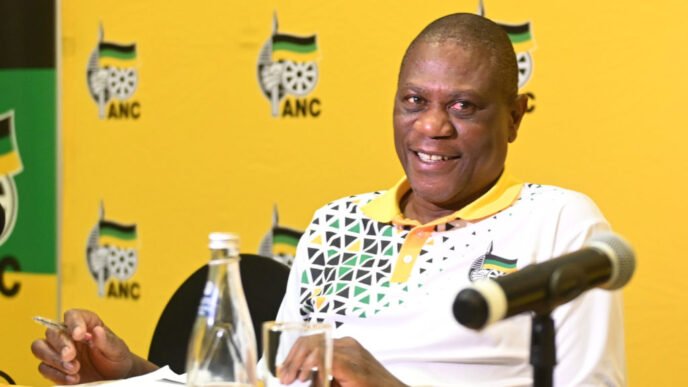
The timing is particularly awkward for President Cyril Ramaphosa, who is currently hosting the ANC NEC Lekgotla in Ekurhuleni. As he vows to “protect the democratic project” at home, his administration’s refusal to support a probe into the suppression of democracy in Iran provides potent ammunition for political rivals.
For the international community, the vote confirms that while South Africa remains a vocal champion for human rights in certain contexts, its “non-aligned” status in the 2026 geopolitical climate often results in a strategic silence when the perpetrators are close allies.